Alligator gar
Atractosteus spatula
(68-82°F)
Care Requirements
💧 Water Parameters
🏠 Tank Setup
🍽️ Diet & Feeding
Carnivorous; feeds on fish, crustaceans, and occasionally small mammals.
🐟 Community Compatibility
Best kept in large ponds or public aquariums due to its massive size.
⚥ Sexual Dimorphism
Males are smaller than females.
🌍 Origin
North America
About Alligator gar
The Alligator Gar, Atractosteus spatula, stands out as one of the largest freshwater fish native to North America, notably within the Mississippi River Basin, extending to parts of Mexico and the Gulf Coast. Its name derives from its distinctively long snout, reminiscent of an alligator's, and the double row of large, sharp teeth in the upper jaw, underscoring its predatory nature.
This species is characterized by its impressive size and prehistoric appearance, with some individuals reaching remarkable lengths and weights. The alligator gar's body is torpedo-shaped, covered in ganoid scales, which are hard, diamond-shaped scales that provide strong protection against predators and environmental elements. These scales have a significant role in the gar's survival, contributing to its reputation as a "living fossil," with a lineage tracing back over a hundred million years.
Alligator gars are apex predators in their ecosystems, feeding on a variety of prey, including fish, waterfowl, and small mammals. Their ambush hunting strategy involves lying motionless, camouflaged within aquatic vegetation, before swiftly capturing prey with their powerful jaws. Despite their formidable appearance and predatory behavior, attacks on humans are extremely rare and usually result from provocation.
In terms of habitat, alligator gars favor large rivers, reservoirs, and estuaries with slow-moving waters and abundant cover. They are capable of tolerating brackish water, allowing them to venture into coastal marine environments. One of the most fascinating aspects of this species is its ability to gulp air from the surface, thanks to a highly vascularized swim bladder functioning similarly to a lung. This adaptation allows them to survive in oxygen-poor waters where other fish might perish.
The reproductive habits of alligator gars are closely tied to seasonal flooding, which provides the necessary conditions for spawning in shallow, vegetated areas. Females lay a substantial number of eggs, which are then fertilized externally by the males. It's worth noting that gar eggs are toxic to humans and other mammals if ingested.
Conservation status of the alligator gar varies regionally, with populations declining in many areas due to habitat loss, overfishing, and water pollution. These factors, coupled with their slow growth rate and late maturity, make them vulnerable to population pressures. Conservation efforts, including research, habitat restoration, and regulated fishing practices, are crucial for ensuring the survival of this remarkable species.
While alligator gars are sometimes kept in aquariums or private ponds, their massive size and specific care requirements make them unsuitable for most private aquarists. Public aquariums and zoos with the capacity to house large specimens provide opportunities for education and research, helping to raise awareness about the importance of conservation for this and other native freshwater species.
Ready to Add Alligator gar to Your Tank?
Use our free stocking calculator to see if Alligator gar fits your aquarium setup!
Try the Stocking CalculatorKeep Your Alligator gar Happy with Fishi
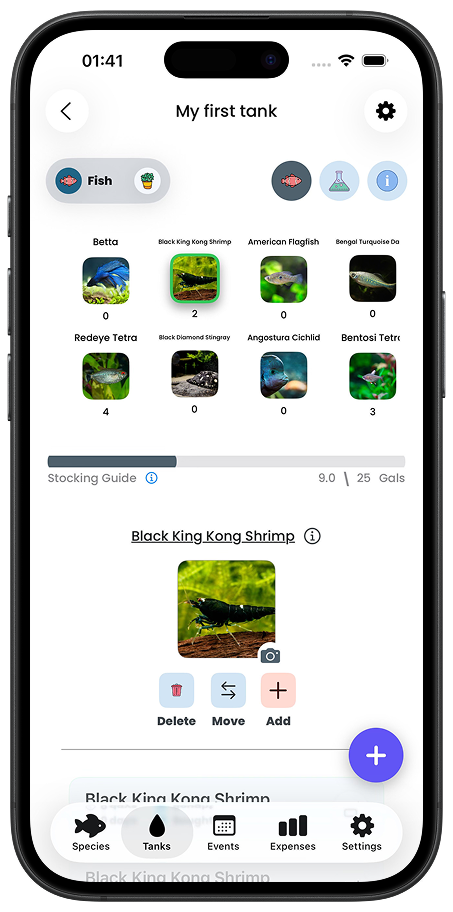
Track your aquarium's health and ensure your Alligator gar is thriving with the Fishi mobile app!
- ✓ Monitor water parameters for optimal Alligator gar health
- ✓ Get reminders for water changes and maintenance
- ✓ Track feeding schedules
- ✓ Log tank observations and fish behavior
- ✓ Manage multiple tanks effortlessly


Loved by over 100,000 fishkeepers