Axolotl
Ambystoma mexicanum
(60-68°F)
Care Requirements
💧 Water Parameters
🏠 Tank Setup
🍽️ Diet & Feeding
Axolotls primarily eat live or frozen food such as worms, insects, and small fish. They have poor eyesight and use their keen sense of smell to locate food.
🐟 Community Compatibility
Axolotls are best kept alone, as they can be cannibalistic towards each other, especially if housed together from a young age. Avoid housing them with small fish, as they may mistake them for food.
⚥ Sexual Dimorphism
Males may have a slightly thicker tail and a noticeable swelling at the base of their tail during the breeding season.
🌍 Origin
Central America
About Axolotl
Axolotls, scientifically known as Ambystoma mexicanum, are captivating amphibians native to the Xochimilco and Chalco regions of Mexico. Often referred to as the "Mexican walking fish," axolotls are actually a type of salamander that retains its aquatic juvenile characteristics throughout its entire life, making them unique among amphibians. With their distinctive appearance and remarkable regenerative abilities, axolotls have become popular pets and subjects of scientific study.
Axolotls display a range of colors, including shades of brown, gray, and even albino varieties. They have a somewhat surreal appearance, characterized by their feathery external gills, fringed gill stalks, and wide mouths. Their legs are short and delicate, and they possess a long, finned tail that aids in swimming.
Caring for axolotls requires providing them with an appropriate aquatic environment. They are fully aquatic and should not be exposed to land, as their adult form remains aquatic throughout their lives. A spacious tank with a gentle water flow and a suitable water filter is essential. Sand or fine gravel substrate is recommended to prevent accidental ingestion. Live or silk plants, along with hiding places like caves and driftwood, create an enriched environment.
Axolotls are carnivorous and feed primarily on aquatic invertebrates and small fish. In captivity, they can be fed a diet of high-quality sinking pellets, frozen or live bloodworms, brine shrimp, and other protein-rich foods. It's essential to avoid overfeeding and to remove any uneaten food to maintain water quality.
These amphibians are generally peaceful, but due to their cannibalistic tendencies, it's crucial to house them individually or with companions of a similar size. Tank mates should be chosen carefully to prevent aggression or predation.
Axolotls are renowned for their regenerative abilities. They can regrow entire limbs, parts of their heart, spinal cord, and even portions of their brain. This remarkable feature makes them valuable subjects for scientific research into tissue regeneration and repair.
Breeding axolotls in captivity is a complex process that often requires mimicking natural temperature changes and providing specific breeding conditions. Axolotls reach sexual maturity around one to two years of age. During breeding, a female axolotl may lay hundreds of eggs that adhere to aquatic plants. The eggs hatch into aquatic larvae, which undergo metamorphosis if exposed to certain conditions, leading to a transformation into a more terrestrial form. However, many axolotl enthusiasts prefer to keep their pets in their aquatic juvenile form, avoiding this metamorphic process.
In conclusion, axolotls are captivating amphibians with unique characteristics and regenerative abilities. With proper care, a suitable aquatic habitat, and a balanced diet, axolotls can thrive in captivity. Their unusual appearance and intriguing behaviors make them an exciting addition to the world of amphibian keeping.
Ready to Add Axolotl to Your Tank?
Use our free stocking calculator to see if Axolotl fits your aquarium setup!
Try the Stocking CalculatorKeep Your Axolotl Happy with Fishi
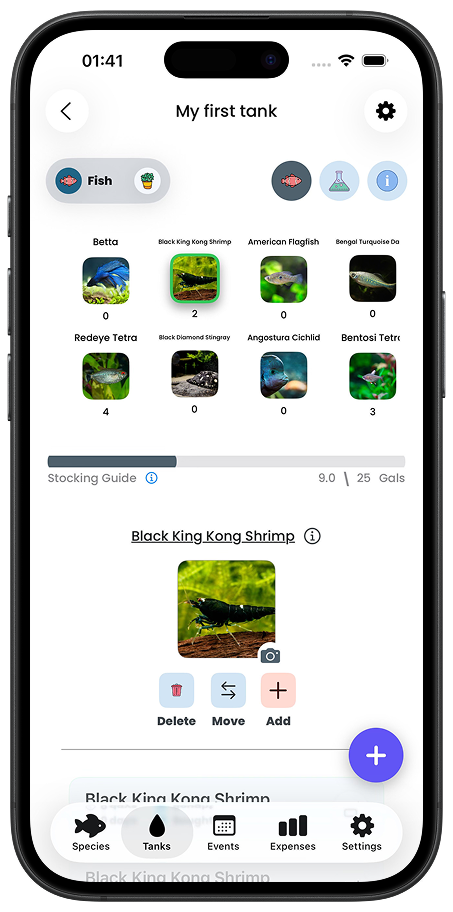
Track your aquarium's health and ensure your Axolotl is thriving with the Fishi mobile app!
- ✓ Monitor water parameters for optimal Axolotl health
- ✓ Get reminders for water changes and maintenance
- ✓ Track feeding schedules
- ✓ Log tank observations and fish behavior
- ✓ Manage multiple tanks effortlessly


Loved by over 100,000 fishkeepers