Banded Banjo Catfish
Platystacus cotylephorus
(72-79°F)
Care Requirements
💧 Water Parameters
🏠 Tank Setup
🍽️ Diet & Feeding
Omnivore; prefers a varied diet including live, frozen, and pellet foods.
🐟 Community Compatibility
Best kept with larger fish due to its size, avoiding small species that could be prey.
⚥ Sexual Dimorphism
Males and females are similar in appearance.
🌍 Origin
South America
About Banded Banjo Catfish
The Banded Banjo Catfish, scientifically known as Platystacus cotylephorus, is a fascinating and somewhat unusual species of freshwater fish native to the rivers and floodplains of South America. This species belongs to the Aspredinidae family, often referred to as banjo catfish due to their flat, elongated bodies that resemble the shape of a banjo. The Banded Banjo Catfish is particularly noted for its unique appearance, featuring a mottled pattern of dark bands over a lighter body, which provides excellent camouflage against the muddy or sandy substrates of its natural habitat.
In the aquarium, the Banded Banjo Catfish is appreciated for its peaceful demeanor and nocturnal habits. During the day, it tends to hide and rest, burying itself in the substrate or seeking shelter among driftwood, rocks, or dense vegetation. As a bottom-dweller, it is essential to provide a soft substrate in the aquarium to mimic the sandy or muddy bottoms of its natural environment, ensuring the catfish can burrow without injuring itself.
The diet of the Banded Banjo Catfish is omnivorous, with a tendency to scavenge for food along the aquarium's bottom. In the wild, it consumes a variety of foods, including worms, small crustaceans, and plant matter. In captivity, their diet should include a balanced mix of sinking pellets, frozen or live foods, and occasional vegetable matter to ensure they receive all the necessary nutrients for optimal health.
Breeding the Banded Banjo Catfish in captivity is considered challenging, with few successful reports. This species exhibits unique breeding behaviors in the wild, but replicating the specific conditions required for spawning in a home aquarium can be difficult. Enthusiasts interested in breeding banjo catfish should focus on creating an environment that closely mimics their natural habitat, including parameters like substrate type, water condition, and availability of hiding spots.
Caring for Platystacus cotylephorus involves maintaining clean water with regular changes and efficient filtration to manage waste and keep the water parameters stable. Their peaceful nature makes them suitable for community tanks with other non-aggressive fish species, though their nocturnal and bottom-dwelling behavior should be considered when selecting tank mates to avoid competition for food and space.
In summary, the Banded Banjo Catfish offers aquarists the opportunity to keep a unique and intriguing species that adds a touch of mystery to the freshwater aquarium. While their care requires attention to their specific environmental, dietary, and behavioral needs, the rewards include the enjoyment of their distinctive appearance and the fascinating aspects of their nocturnal lifestyle, enhancing the diversity and interest of the aquatic world within the home.
Ready to Add Banded Banjo Catfish to Your Tank?
Use our free stocking calculator to see if Banded Banjo Catfish fits your aquarium setup!
Try the Stocking CalculatorKeep Your Banded Banjo Catfish Happy with Fishi
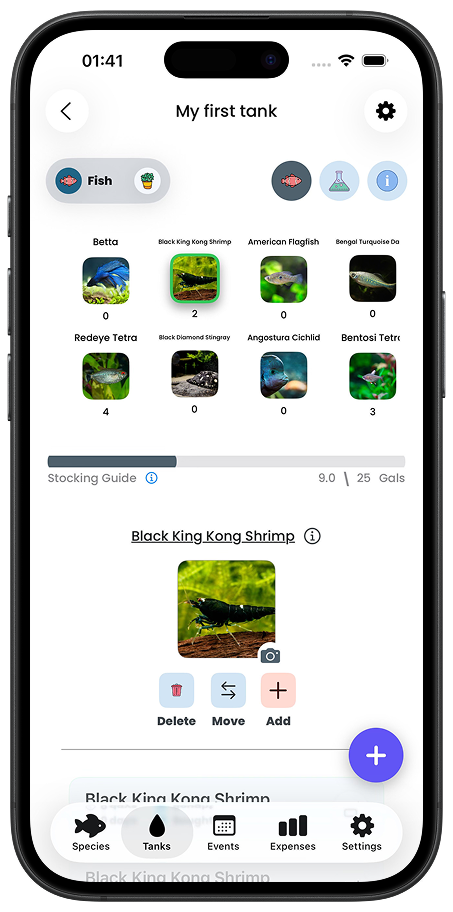
Track your aquarium's health and ensure your Banded Banjo Catfish is thriving with the Fishi mobile app!
- ✓ Monitor water parameters for optimal Banded Banjo Catfish health
- ✓ Get reminders for water changes and maintenance
- ✓ Track feeding schedules
- ✓ Log tank observations and fish behavior
- ✓ Manage multiple tanks effortlessly


Loved by over 100,000 fishkeepers