Bengal Turquoise Danio
Devario devario
(72-79°F)
Care Requirements
💧 Water Parameters
🏠 Tank Setup
🍽️ Diet & Feeding
Bengal Turquoise Danios thrive on a varied diet including flake foods, small pellets, and live or frozen foods such as brine shrimp and daphnia.
🐟 Community Compatibility
Suitable for community tanks with other peaceful, small to medium-sized fish. Ideal tank mates include other danios, tetras, and rasboras.
⚥ Sexual Dimorphism
Males tend to be slimmer and more vibrantly colored, while females are usually larger and fuller-bodied.
🌍 Origin
Southeast Asia
About Bengal Turquoise Danio
The Bengal Turquoise Danio, scientifically recognized as Devario devario, is a mesmerizing species that brings a splash of color and vitality to freshwater aquariums. Native to the vibrant waterways of South Asia, specifically regions around Bangladesh and India, this species is cherished for its striking appearance and dynamic behavior. The name "Bengal Turquoise" aptly describes the iridescent turquoise sheen that adorns their bodies, complemented by intricate patterning that makes them a visual spectacle in any aquatic setting.
Danios, including the Bengal Turquoise variety, are renowned for their hardiness and adaptability, making them well-suited to a variety of aquarium conditions. Their active and playful nature endears them to aquarists of all levels, from beginners seeking resilient species to seasoned enthusiasts looking to add a dash of dynamism to their community tanks. Bengal Turquoise Danios are particularly noted for their schooling behavior, which not only enhances their survival by mimicking their natural habitat dynamics but also creates a stunning display as they dart and weave through the water in synchronized harmony.
The diet of Devario devario reflects their omnivorous tendencies, incorporating a wide range of food sources. In the wild, they feed on small invertebrates, algae, and plant matter, a varied diet that is easily replicated in captivity. They thrive on high-quality flake foods, frozen or live foods such as daphnia, brine shrimp, and bloodworms, showcasing their flexibility and ease of care when it comes to feeding.
Breeding Bengal Turquoise Danios in captivity can be a rewarding venture. They are known to spawn readily under the right conditions, often requiring a breeding tank set up with fine-leaved plants or spawning mops where the female can deposit her eggs. The non-parental care nature of these fish means that the eggs and fry should be removed to a separate rearing tank to increase survival rates, as adults may predate on their offspring.
Caring for Bengal Turquoise Danios involves providing them with an environment that mimics their natural habitat. This includes clean, well-oxygenated water, a moderate current, and ample space to accommodate their active swimming habits. Though they are adaptable to a range of water conditions, maintaining stable water quality is crucial for their well-being. The inclusion of plants and hiding spots can also help replicate the complexity of their natural environment, providing shelter and stimulating natural behaviors.
In summary, Devario devario, with its vibrant coloration and lively demeanor, offers a unique opportunity to observe the dynamic interactions and beauty of South Asian river ecosystems from the comfort of one's home. Their ease of care, coupled with their engaging social behaviors, makes them a favored choice among aquarists, contributing to a rich and diverse aquarium community.
Ready to Add Bengal Turquoise Danio to Your Tank?
Use our free stocking calculator to see if Bengal Turquoise Danio fits your aquarium setup!
Try the Stocking CalculatorKeep Your Bengal Turquoise Danio Happy with Fishi
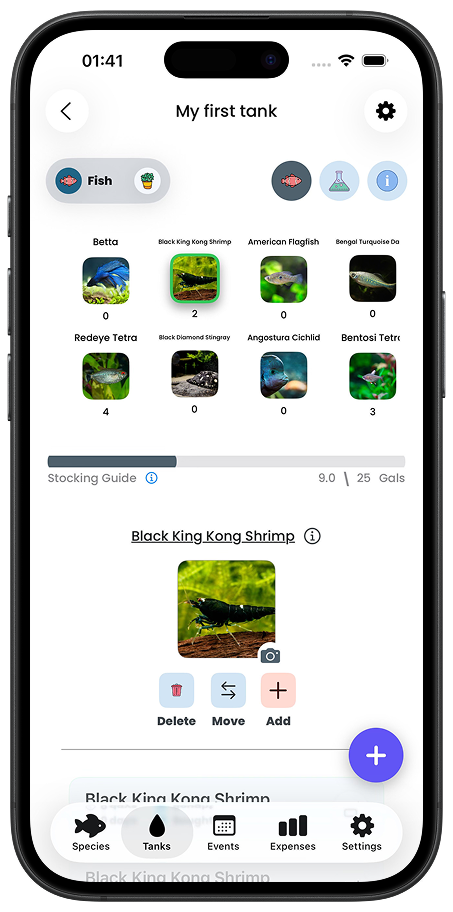
Track your aquarium's health and ensure your Bengal Turquoise Danio are thriving with the Fishi mobile app!
- ✓ Monitor water parameters for optimal Bengal Turquoise Danio health
- ✓ Get reminders for water changes and maintenance
- ✓ Track feeding schedules
- ✓ Log tank observations and fish behavior
- ✓ Manage multiple tanks effortlessly


Loved by over 100,000 fishkeepers