Betta hendra
Betta hendra
(76-82°F)
Care Requirements
💧 Water Parameters
🏠 Tank Setup
🍽️ Diet & Feeding
In captivity it readily accepts small live and frozen foods such as daphnia, brine shrimp, and bloodworms, along with high-quality micro-pellets formulated for carnivorous fish.
🐟 Community Compatibility
Best kept alone or with very peaceful, non‑fin‑nipping tankmates that will not provoke aggression.
⚥ Sexual Dimorphism
Males typically show more intense iridescent green on the body and fins, along with darker vertical bars on the gill covers.
🌍 Origin
Southeast Asia
About Betta hendra
A whisper of fish slips through tea-colored water and disappears beneath a curl of leaf—meet Betta hendra, a wild betta that wears the mystery of Borneo’s peat swamps like a cloak.
This species is native to blackwater habitats in the Indonesian part of Borneo, where forests sit atop deep beds of peat and rainfall steeps the pools a dark, translucent brown. In that dim world, light scatters in flecks, and small fish survive by staying low, moving slowly, and letting the forest litter do the hiding. Like other bettas, Betta hendra belongs to the labyrinth fishes, capable of taking gulps of air at the surface—an elegant workaround for life in warm, oxygen-poor water.
Betta hendra is a relatively recent arrival to science compared with its famous domesticated cousin. It’s regarded as a localized, peat-swamp specialist, and the very name “hendra” honors a person—though I don’t know the exact story behind the dedication. What captivates many observers is how its coloration comes alive only when the angle and light are just right: a subdued fish one moment, a flash of iridescence and intent the next, especially during displays.
Behavior tells much of its story. Wild bettas are masters of understatement, holding still among roots, then flaring fins and gill covers in brief, ritualized confrontations. Communication is subtle—posture, shimmer, and short lunges—because in water the color of strong tea, communication is about contrast and movement more than bold patterns. Sexual dimorphism exists in many wild bettas but tends to be refined rather than extravagant, a nod to life in shadow rather than spotlight.
Breeding in the genus usually involves devoted paternal care, with males guarding eggs and fry either at a nest or directly in the mouth. For Betta hendra specifically, I don’t know which strategy it uses, but that father-first approach is a signature of the group and a big reason these fishes have fascinated naturalists for generations.
There’s a larger story wrapped around this little fish. Peat-swamp forests are among Southeast Asia’s most threatened ecosystems, challenged by drainage, fire, and conversion. Species tied closely to these waters often occupy tight geographic ranges, which makes them vulnerable when the landscape changes. Betta hendra stands as a small, vivid ambassador for an overlooked biome—one that still hides new discoveries and reminds us how much of the world’s color is found in its quietest corners.
Ready to Add Betta hendra to Your Tank?
Use our free stocking calculator to see if Betta hendra fits your aquarium setup!
Try the Stocking CalculatorKeep Your Betta hendra Happy with Fishi
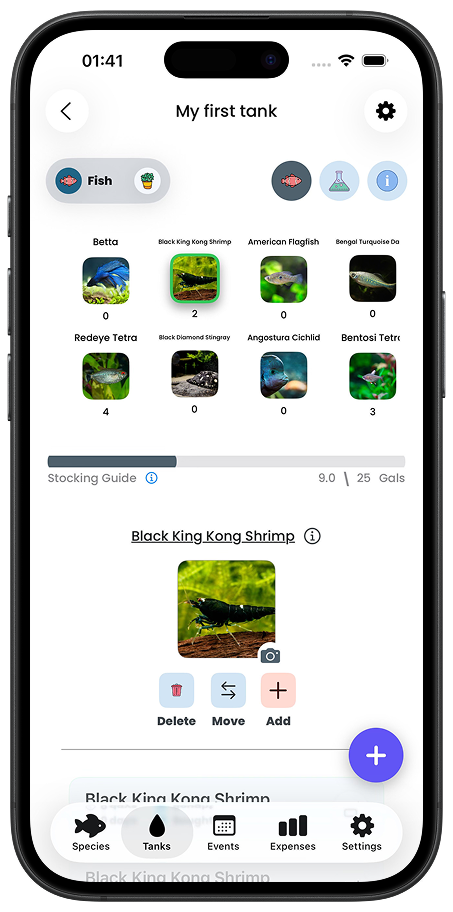
Track your aquarium's health and ensure your Betta hendra is thriving with the Fishi mobile app!
- ✓ Monitor water parameters for optimal Betta hendra health
- ✓ Get reminders for water changes and maintenance
- ✓ Track feeding schedules
- ✓ Log tank observations and fish behavior
- ✓ Manage multiple tanks effortlessly


Loved by over 100,000 fishkeepers