Betta mahachaiensis
Betta mahachaiensis
(77-82°F)
Care Requirements
💧 Water Parameters
🏠 Tank Setup
🍽️ Diet & Feeding
In the wild it primarily feeds on small invertebrates such as insect larvae, worms, and crustaceans, while in captivity it accepts a variety of live, frozen, and high-quality prepared foods.
🐟 Community Compatibility
Best kept singly or with very peaceful, non-fin-nipping tankmates that do not resemble it in shape or coloration.
⚥ Sexual Dimorphism
Males are more intensely colored with brighter metallic iridescence and longer fins, while females appear browner with shorter fins and a visible egg spot.
🌍 Origin
Southeast Asia
About Betta mahachaiensis
If jewel-toned fish had urban legends, Betta mahachaiensis would be the whispered tale from the canals outside Bangkok. This striking labyrinth fish was only formally described in 2012, yet locals had known it for generations as “Pla Kat Mahachai,” named for the Mahachai district of Samut Sakhon. Its natural home is unusual for a betta: brackish, tannin-stained waterways threading through stands of nipa palm (Nypa fruticans), where tidal rhythms nudge the margins of freshwater and sea.
Part of the Betta splendens complex, B. mahachaiensis sits alongside better-known cousins like B. splendens, B. imbellis, and B. smaragdina, but it wears its own signature shine. Males shimmer with metallic turquoise to emerald, their bodies often edged in a dark reticulation that makes each scale pop under angled light. Females are subtler, with a similar structural iridescence that flickers rather than blazes—one moment charcoal, the next, a flash of neon.
The species’ color magic comes from microscopic layers in the skin that refract light, not pigment alone. Watch one pivot and you’ll see the hue shift as if the fish were turning a dial; it’s a living demonstration of physics in motion. That flash isn’t only for show—among dense roots and shadowed water, quick signals help fish spot mates and rivals without lighting up the whole neighborhood.
B. mahachaiensis is a bubble-nester, with males crafting foamy rafts in sheltered pockets among palm roots and fallen leaves. Courtship is a quiet choreography: circling, flaring, and a careful embrace beneath the nest, followed by devoted paternal guard duty. The labyrinth organ—an evolutionary air-breathing adaptation—lets them thrive where oxygen dips, an advantage in still, organic-rich waters.
Despite its recent scientific debut, the fish has a long story intertwined with people. Coastal development around Bangkok has squeezed and fragmented its nipa palm habitat, and contact with domestic bettas risks washing out its distinct genetics. Conservation-minded breeders and local enthusiasts have raised awareness precisely because B. mahachaiensis represents a vanishing slice of Thailand’s coastal wetland mosaic.
What makes this species compelling isn’t just the color—it’s the edge-of-the-map life it leads. It’s a betta adapted to tides and palms, navigating a world of brackish shadows with a glint you catch only when the light hits just right. In a genus full of icons, Betta mahachaiensis earns its place by being unmistakably itself: resilient, radiant, and rooted in a very specific corner of the world.
Ready to Add Betta mahachaiensis to Your Tank?
Use our free stocking calculator to see if Betta mahachaiensis fits your aquarium setup!
Try the Stocking CalculatorKeep Your Betta mahachaiensis Happy with Fishi
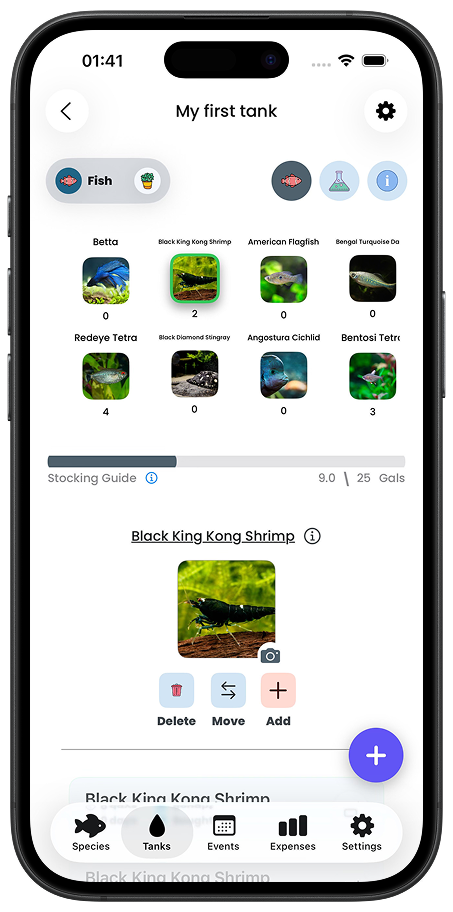
Track your aquarium's health and ensure your Betta mahachaiensis is thriving with the Fishi mobile app!
- ✓ Monitor water parameters for optimal Betta mahachaiensis health
- ✓ Get reminders for water changes and maintenance
- ✓ Track feeding schedules
- ✓ Log tank observations and fish behavior
- ✓ Manage multiple tanks effortlessly


Loved by over 100,000 fishkeepers