Betta patoti
Betta patoti
(75-82°F)
Care Requirements
💧 Water Parameters
🏠 Tank Setup
🍽️ Diet & Feeding
Primarily carnivorous, feeding on small invertebrates, insect larvae, and zooplankton, and in captivity can be maintained on frozen and live foods such as bloodworms, brine shrimp, and daphnia.
🐟 Community Compatibility
Best kept either alone or with very peaceful, non-fin-nipping tankmates that will not provoke aggression.
⚥ Sexual Dimorphism
Males are generally larger, more colorful, and have slightly more elongated fins, while females tend to be rounder-bodied with shorter fins.
🌍 Origin
Southeast Asia
About Betta patoti
In a world obsessed with flashy domestic bettas, Betta patoti is the quiet, jungle-clad original that steals the show without even trying.
This is a wild Borneo betta, reported from the tea-stained streams and forest swamps of Indonesian Kalimantan. Picture dim light under a cathedral of dipterocarp trees, leaf litter piling up like a patchwork quilt, and water the color of brewed tea from tannins—this is its stage. Unlike the ornate, human-made splendens forms, B. patoti belongs to a lineage that evolved for stealth, patience, and life in oxygen-poor backwaters.
Its look is subtle until it isn’t: an earthy base that flashes metallic greens and blues along the head and flanks when the fish is alert, crossed by dusky vertical bars that appear and vanish with mood. Males tend to grow larger and carry more imposing heads and fins, and when two rivals size each other up, the controlled theater—flaring opercula, elongate bodies held rigid—feels ancient and ritualistic.
Like many of Borneo’s wild bettas, B. patoti is a paternal mouthbrooder: after a minimalistic courtship, the male carries the eggs and developing fry in his mouth, guarding them in silence until they’re ready to fend for themselves. Layered on top of that is the labyrinth organ, the signature betta adaptation that lets it gulp atmospheric air and slip through waters where gill-breathers would falter. The combination makes the species a master of marginal habitats—quiet edges, leaf-choked gullies, and the dark seams between roots.
Field notes and hobby reports paint a picture of a fish that prefers the shadows, emerging with confidence at dawn and dusk. It’s not a common export, and when it does appear, it often carries a locality tag—clues to the patchwork of isolated populations that make Borneo such a hotspot for micro-endemism. That geographic mosaic is also why taxonomists still debate how some of these big, brown, iridescent bettas relate to one another.
There’s a serious side to its beauty: the peat swamp forests it calls home are among the most threatened ecosystems on Earth, squeezed by drainage, fires, mining, and the spread of monoculture plantations. Even when a species’ formal conservation status isn’t crystal clear, the loss of habitat is, and for a fish tied so tightly to blackwater forest, every drained peat dome and burned thicket narrows the margins.
Betta patoti is the kind of fish that rewards patience—less fireworks, more slow-burn charisma. It’s a living fragment of Borneo’s shadowy waterways, a reminder that the wild betta story is richer, stranger, and more elegant than any domesticated cousin can show from a shop display.
Ready to Add Betta patoti to Your Tank?
Use our free stocking calculator to see if Betta patoti fits your aquarium setup!
Try the Stocking CalculatorKeep Your Betta patoti Happy with Fishi
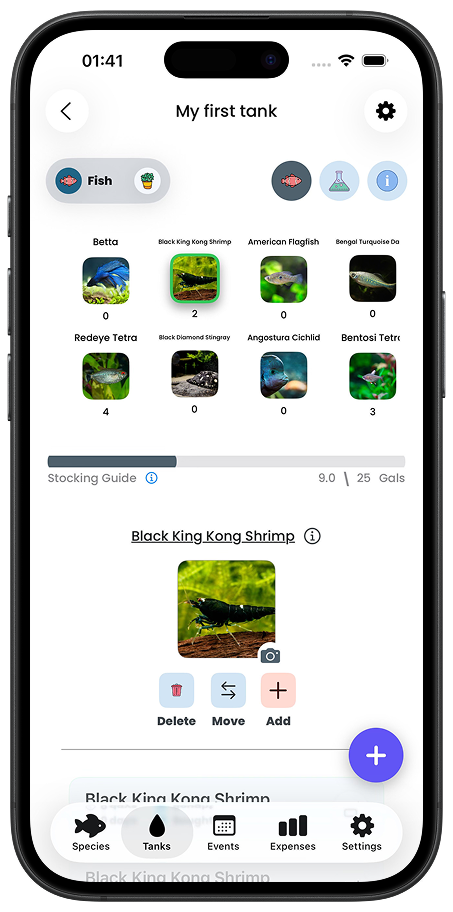
Track your aquarium's health and ensure your Betta patoti is thriving with the Fishi mobile app!
- ✓ Monitor water parameters for optimal Betta patoti health
- ✓ Get reminders for water changes and maintenance
- ✓ Track feeding schedules
- ✓ Log tank observations and fish behavior
- ✓ Manage multiple tanks effortlessly


Loved by over 100,000 fishkeepers