Betta rubra
Betta rubra
(75-82°F)
Care Requirements
💧 Water Parameters
🏠 Tank Setup
🍽️ Diet & Feeding
In the wild it primarily feeds on small aquatic invertebrates such as insect larvae and crustaceans, but in captivity it readily accepts prepared foods like pellets, frozen foods, and live foods.
🐟 Community Compatibility
Best kept in a species-only setup or with very small, peaceful fish that will not nip fins or outcompete it, in a calm, heavily planted aquarium.
⚥ Sexual Dimorphism
Males display broader black body bars and a more intense red coloration on the fins, while females tend to have paler hues and less sharply defined striping.
🌍 Origin
Southeast Asia
About Betta rubra
Small, scarlet, and full of surprises—Betta rubra is the wild betta that rewrites what you think you know about “fighting fish.”
Hailing from the shaded blackwater streams of northern Sumatra, particularly the Aceh region, this species lives where the forest floor steeps the water in tea-dark tannins. Its name says it all—rubra, “red”—a nod to the vertical crimson bars that flash against a soot-brown body when the fish is confident or courting. In dappled light and leaf litter, those bars double as camouflage, fragmenting the fish’s outline among twigs and roots.
Betta rubra is especially fascinating because it looks like the tiny “red bettas” many people associate with bubble nests, yet it bucks the trend: males are paternal mouthbrooders. Courtship culminates in a gentle embrace, after which the male gathers and incubates the clutch in his mouth until the fry are ready to fend for themselves. It’s a slow, high-investment strategy that makes every brood count—and gives observers a window into a very different betta family life.
In the wild, B. rubra prowls for micro-prey—think insect larvae and tiny crustaceans—threading through submerged branches in water that’s soft, acidic, and stained the color of strong tea. Like all bettas, it carries a labyrinth organ, allowing it to sip atmospheric oxygen at the surface when still backwaters run low on dissolved O2. Shy and deliberate rather than bombastic, it relies on stealth and short sprints instead of showy brawls.
Look closely and the details keep rewarding you. Males intensify to deep black and ember-red when displaying, while females tend to be subtler, with patterning that melts into the leaf bed. Local populations vary; some show richer reds or darker masks, hinting at the patchwork of isolated peat swamps these fish call home. In moments of tension or courtship, the barring can switch on like a signal flag, then fade as quickly as it came.
There’s also a bigger story in the background. The peat forests and swamps of Sumatra are under pressure from drainage and land conversion, and small, range-restricted fishes like B. rubra feel those changes first. Often nicknamed the “Aceh betta” in the hobby, it has become a quiet ambassador for the value of blackwater ecosystems—habitats that look empty at first glance but are anything but.
If Betta splendens is the extrovert of the genus, Betta rubra is the poet: understated, complex, and perfectly adapted to the dim, tea-stained world between roots and leaves. Watching one slip through amber water is a reminder that bettas aren’t just gladiators—they’re specialists, survivors, and storytellers from a vanishing forest.
Ready to Add Betta rubra to Your Tank?
Use our free stocking calculator to see if Betta rubra fits your aquarium setup!
Try the Stocking CalculatorKeep Your Betta rubra Happy with Fishi
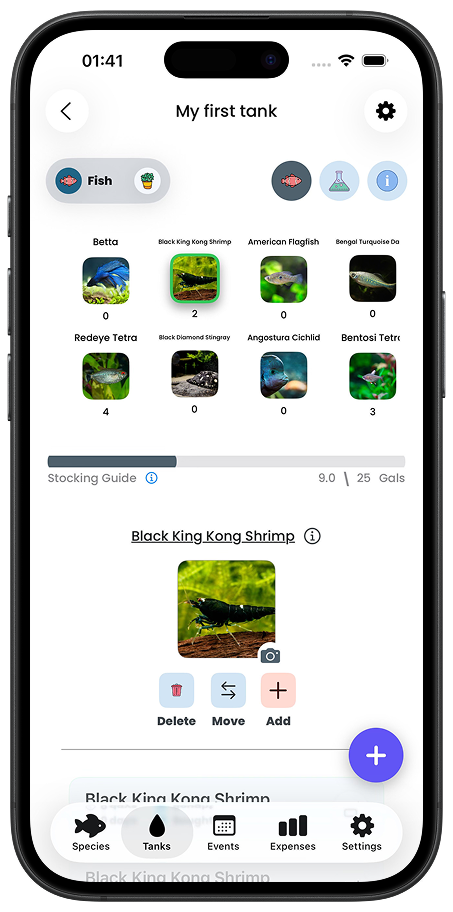
Track your aquarium's health and ensure your Betta rubra is thriving with the Fishi mobile app!
- ✓ Monitor water parameters for optimal Betta rubra health
- ✓ Get reminders for water changes and maintenance
- ✓ Track feeding schedules
- ✓ Log tank observations and fish behavior
- ✓ Manage multiple tanks effortlessly


Loved by over 100,000 fishkeepers