Betta stiktos
Betta stiktos
(78-82°F)
Care Requirements
💧 Water Parameters
🏠 Tank Setup
🍽️ Diet & Feeding
In the wild it likely feeds on small aquatic invertebrates such as insect larvae and zooplankton, while in captivity it can be maintained on a varied diet of quality pellets, frozen foods, and live prey like daphnia or brine shrimp.
🐟 Community Compatibility
Best kept singly or with very peaceful, non-fin-nipping species that inhabit other areas of the tank, as it may become territorial toward similar fish.
⚥ Sexual Dimorphism
No easily discernible differences between genders
🌍 Origin
Southeast Asia
About Betta stiktos
If you think all bettas are flamboyant showstoppers, Betta stiktos is the quiet rebel that rewards a closer look.
This is a wild betta from mainland Southeast Asia, known in the hobby for subtle beauty rather than fireworks. It sits among the close kin of the Siamese fighting fish—part of that tangled cluster of wild forms that inhabit floodplains, ditches, and slow streams across the Mekong region. Betta stiktos was only formally recognized comparatively recently, a reminder that even familiar fish groups still hold overlooked diversity in plain sight.
The fish’s appeal is all in the details: a dusky base color overlaid with fine iridescent highlights that catch the light in blue‑green flecks. The species name hints at that speckled look. Compared with domesticated bettas, the body is more streamlined, the finnage restrained, and the overall palette earthier—evolution tuned for leaf litter and shadow rather than glass‑box pageantry. Males and females are more similar than in ornamental strains, but males tend to show crisper patterning when they posture.
Behavior is classic betta with a wild twist. Betta stiktos sports a labyrinth organ, letting it gulp air at the surface—an edge in warm, still waters where oxygen dips. Territorial encounters are a choreography of flares, lateral displays, and measured retreats, and courtship features the intimate “embrace” typical of the genus. In the right light you can see the iridescence flicker during these standoffs, a natural signal system evolved for dim, tea‑stained habitats.
Taxonomically, stiktos is a case study in how nuanced wild bettas can be. It has been confused with lookalikes, and regional variation only deepens the puzzle; what once passed as a “local form” has, in several bettas, turned out to be distinct species after closer scrutiny. That makes Betta stiktos interesting to science and to hobbyists who value locality and lineage as much as looks.
There’s also a bigger story here about place. The seasonal waters this fish calls home rise and fall with monsoon rhythms, and they’re under pressure from drainage, pollution, and land conversion. Each well‑documented wild betta—stiktos included—acts like a tiny envoy from those threatened wetlands, reminding us that quiet species and quiet waters are easy to overlook, and just as easy to lose.
Ready to Add Betta stiktos to Your Tank?
Use our free stocking calculator to see if Betta stiktos fits your aquarium setup!
Try the Stocking CalculatorKeep Your Betta stiktos Happy with Fishi
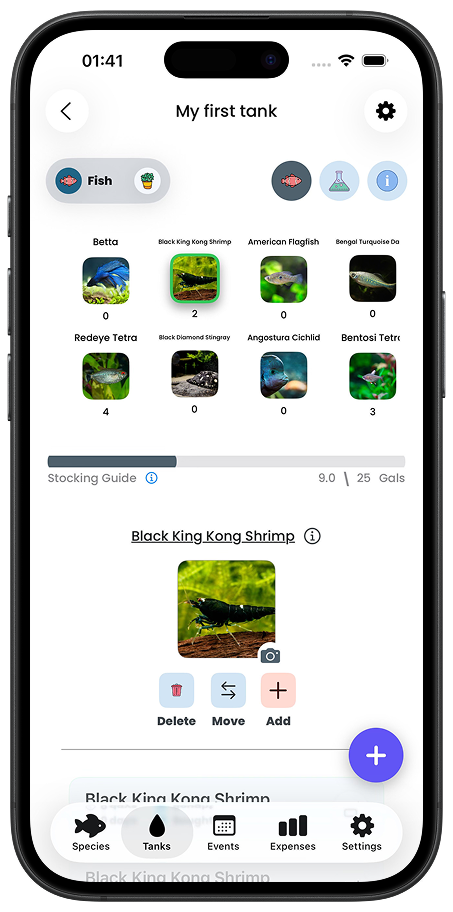
Track your aquarium's health and ensure your Betta stiktos is thriving with the Fishi mobile app!
- ✓ Monitor water parameters for optimal Betta stiktos health
- ✓ Get reminders for water changes and maintenance
- ✓ Track feeding schedules
- ✓ Log tank observations and fish behavior
- ✓ Manage multiple tanks effortlessly


Loved by over 100,000 fishkeepers