Black Otocinclus
Hisonotus notatus
(72-79°F)
Care Requirements
💧 Water Parameters
🏠 Tank Setup
🍽️ Diet & Feeding
Primarily herbivorous, thrives on a diet of algae, sinking algae wafers, and blanched vegetables.
🐟 Community Compatibility
Very suitable for community tanks with other small, peaceful fish. Good companions for tetras, rasboras, and small corydoras.
⚥ Sexual Dimorphism
Difficult to distinguish; both sexes are similarly sized and colored.
🌍 Origin
South America
About Black Otocinclus
The Black Otocinclus, scientifically known as Hisonotus notatus, stands out as a unique and somewhat elusive species within the aquarium hobby. Native to the freshwater habitats of South America, particularly in regions with slow-moving waters and abundant vegetation, this small catfish captivates enthusiasts with its dark coloration, a stark contrast to the more commonly recognized Otocinclus species. Their compact size and peaceful nature make them an excellent addition to community tanks, particularly those with a focus on planted setups.
One of the defining characteristics of the Black Otocinclus is its adaptability and the role it plays in algae control within the aquarium. These fish are known for their diligent grazing on algae-covered surfaces, including leaves, glass, and decorations, making them natural cleaners that contribute to the maintenance of a healthy aquatic environment. Despite their hardworking nature, they are gentle and should be housed with similarly peaceful tank mates to ensure a harmonious community.
The diet of Hisonotus notatus, while primarily focused on algae, should be supplemented with high-quality vegetable-based foods to ensure their nutritional needs are fully met. This can include algae wafers, blanched vegetables, and occasional offerings of high-quality sinking pellets. Ensuring a varied diet is crucial for their health and vitality, as it mimics the diverse array of food sources they would encounter in their natural habitat.
Breeding the Black Otocinclus in captivity is a rare occurrence, with little documentation on successful breeding practices within home aquariums. Their specific breeding habits remain largely a mystery, and replicating the exact conditions necessary for spawning can be challenging. However, maintaining pristine water conditions, a varied diet, and an stress-free environment may encourage natural breeding behaviors.
Caring for Black Otocinclus involves creating an environment that closely resembles their natural habitat. This includes soft, slightly acidic water with plenty of hiding spots and surfaces for algae growth. They thrive in tanks that are well-established, as these environments tend to have more natural algae and biofilm for them to graze on. The use of live plants, driftwood, and smooth rocks can enhance the tank's aesthetic appeal while providing the necessary grazing areas for these catfish.
In summary, the Black Otocinclus, Hisonotus notatus, offers an intriguing option for aquarists seeking to add diversity and natural algae control to their freshwater setups. Their care, while not significantly different from that of other small catfish, emphasizes the importance of a balanced diet and stable, clean water conditions. For those willing to meet their needs, these diminutive cleaners can play a vital role in the ecological balance of the aquarium, all while adding a unique visual element to the aquatic community.
Ready to Add Black Otocinclus to Your Tank?
Use our free stocking calculator to see if Black Otocinclus fits your aquarium setup!
Try the Stocking CalculatorKeep Your Black Otocinclus Happy with Fishi
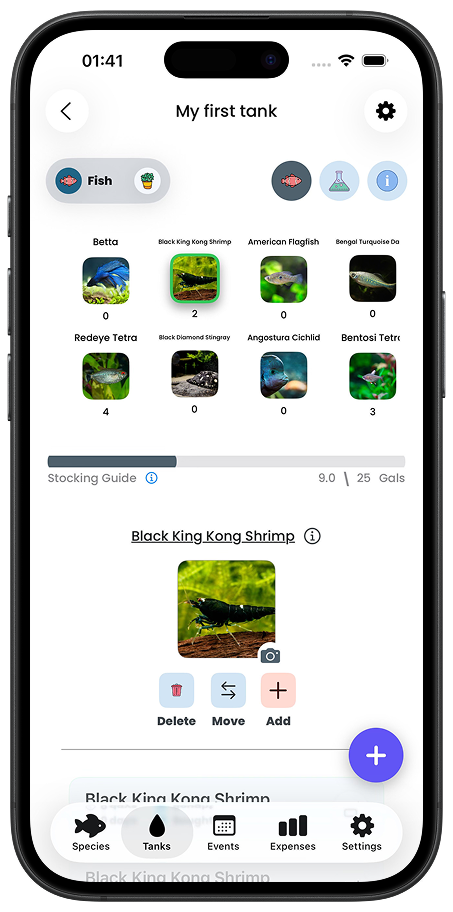
Track your aquarium's health and ensure your Black Otocinclus are thriving with the Fishi mobile app!
- ✓ Monitor water parameters for optimal Black Otocinclus health
- ✓ Get reminders for water changes and maintenance
- ✓ Track feeding schedules
- ✓ Log tank observations and fish behavior
- ✓ Manage multiple tanks effortlessly


Loved by over 100,000 fishkeepers