Blue Panchax
Aplocheilus panchax
(68-79°F)
Care Requirements
💧 Water Parameters
🏠 Tank Setup
🍽️ Diet & Feeding
Omnivorous, prefers live foods like brine shrimp, daphnia, and mosquito larvae, but will also accept flake and frozen foods.
🐟 Community Compatibility
Can be suitable for community tanks with similarly sized, peaceful to semi-aggressive species. May prey on very small fish and invertebrates.
⚥ Sexual Dimorphism
Males are more colorful and may display longer fins than females.
🌍 Origin
Southeast Asia
About Blue Panchax
The Blue Panchax, scientifically known as Aplocheilus panchax, is a vibrant and captivating species that adds a splash of color and activity to freshwater aquariums. Native to a wide range of habitats across South Asia, including India, Sri Lanka, and parts of Southeast Asia, this species is adaptable and can thrive in a variety of water conditions, making it a popular choice among both novice and experienced aquarists.
Renowned for its stunning iridescent blue coloration, the Blue Panchax is a small, surface-dwelling fish that exhibits intriguing behaviors and a peaceful temperament. They are best known for their predatory nature towards small insects and larvae at the water's surface, making them a natural choice for controlling mosquito populations in their native habitat. In the aquarium, they provide an equally fascinating display as they hunt for food.
The diet of the Blue Panchax should reflect their carnivorous nature, with a preference for live or frozen foods such as brine shrimp, daphnia, and mosquito larvae. Offering a varied diet that includes these foods will not only ensure their nutritional needs are met but also encourage natural foraging behaviors and provide mental stimulation.
Despite their peaceful demeanor towards most tank mates, care should be taken when housing Blue Panchax with very small or fin-nipping species, as their larger size and hunting instincts may lead to stress or injury to smaller fish. They thrive in community tanks with species of similar size and temperament, where their striking appearance and surface activity can be admired without competition or aggression.
Breeding Aplocheilus panchax in captivity can be a rewarding experience, with the species readily spawning under the right conditions. They are egg layers, scattering their eggs among plants or in a spawning mop placed at the water's surface. The parents do not exhibit care for the eggs or fry, so it may be necessary to remove the adults after spawning to prevent them from eating the eggs or fry.
Caring for the Blue Panchax involves maintaining clean, well-oxygenated water and providing an environment that mimics their natural habitat. This includes plenty of open swimming space at the water's surface, as well as areas of dense planting or floating plants to offer shelter and breeding sites. Regular water changes and careful monitoring of water parameters are essential to keep these fish healthy and vibrant.
In summary, the Blue Panchax offers a unique combination of beauty, intriguing behavior, and ease of care, making it a desirable addition to a wide range of freshwater aquarium setups. Their adaptability and surface-dwelling nature provide a dynamic element to the aquarium, captivating observers with their shimmering colors and graceful movements. For those willing to meet their needs, Aplocheilus panchax can be a rewarding and striking presence in the home aquarium.
Ready to Add Blue Panchax to Your Tank?
Use our free stocking calculator to see if Blue Panchax fits your aquarium setup!
Try the Stocking CalculatorKeep Your Blue Panchax Happy with Fishi
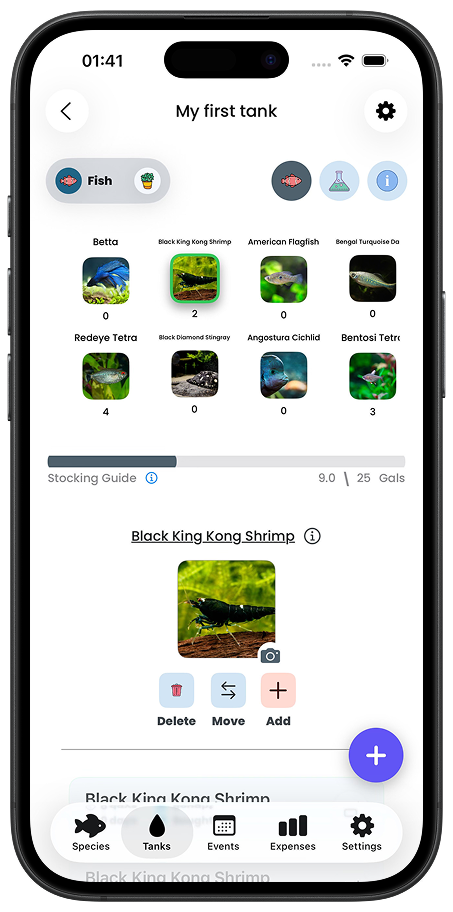
Track your aquarium's health and ensure your Blue Panchax is thriving with the Fishi mobile app!
- ✓ Monitor water parameters for optimal Blue Panchax health
- ✓ Get reminders for water changes and maintenance
- ✓ Track feeding schedules
- ✓ Log tank observations and fish behavior
- ✓ Manage multiple tanks effortlessly


Loved by over 100,000 fishkeepers