Blue Velvet Shrimp
Neocaridina davidi
(70-78°F)
Care Requirements
💧 Water Parameters
🏠 Tank Setup
🍽️ Diet & Feeding
Omnivorous. They primarily feed on biofilm, algae, and organic matter in the aquarium. You can supplement their diet with high-quality shrimp pellets, algae wafers, blanched vegetables (such as zucchini or spinach), and small live or frozen foods like brine shrimp or daphnia.
🐟 Community Compatibility
Cherry Shrimp can be kept with small, peaceful fish like guppies, tetras, or rasboras. Avoid aggressive or fin-nipping fish that may harm the shrimp. Also, be cautious with larger cichlids or predatory fish that may view the shrimp as food. It's generally recommended to keep them in a shrimp-only or species-specific tank.
⚥ Sexual Dimorphism
Males are generally smaller and slimmer, while females are larger with a rounder abdomen.
🌍 Origin
Southeast Asia
About Blue Velvet Shrimp
Neocaridina davidi var "blue", often called the blue velvet shrimp, is one of those aquarium inhabitants that manages to be both subtle and striking at the same time. At first glance it’s a small, almost delicate creature, but once you notice that deep, velvety blue coloration moving across the tank, it becomes hard to look away. The blue velvet variety is a selectively bred color form of the common Neocaridina davidi, a species that has become incredibly popular in the aquarium hobby thanks to its hardiness, peaceful nature, and endless range of colors. In a well-lit, planted aquarium, a group of blue velvets looks like living drops of sapphire gliding over leaves, stones, and driftwood.
One of the reasons blue velvet shrimp are so loved is how accessible they are, even for beginners. They don’t demand complicated equipment or extreme water parameters, and they’re generally quite forgiving as long as the basics are covered: stable water, no sudden changes, and no aggressive tankmates. They thrive in planted tanks where they can graze on biofilm, algae, and tiny bits of leftover food throughout the day. Watching them is surprisingly calming, as they constantly pick, clean, and explore every surface, turning the aquarium into a miniature, busy ecosystem.
Beyond their beauty, these shrimp play a useful role in the tank. They are excellent little janitors, helping to keep algae and detritus under control, especially in nano aquariums. While they won’t replace regular maintenance, they definitely contribute to a healthier and cleaner environment. Their constant grazing also encourages the growth of biofilm, which in turn supports the shrimp colony itself and other microfauna in the tank. In many ways, they’re not just decoration, but an active part of the aquarium’s balance. Breeding blue velvet shrimp is another aspect that makes them so appealing. If they’re comfortable and the conditions are right, they will reproduce readily, and over time you can watch a small group grow into a lively colony. The females carry their eggs under their abdomen, and once the tiny shrimp hatch, they’re miniature versions of the adults, already capable of grazing on their own. Seeing the full life cycle happen in your aquarium adds a special kind of satisfaction and makes the tank feel truly alive.
In the end, Neocaridina davidi “Blue Velvet” shrimp are a perfect example of how something small can have a big impact. They bring color, motion, and purpose to an aquarium without demanding much in return. Whether you’re setting up a dedicated shrimp tank or just want to add a touch of living blue to a peaceful community setup, these little shrimp have a way of quietly becoming one of the most enjoyable parts of the entire aquarium.
Ready to Add Blue Velvet Shrimp to Your Tank?
Use our free stocking calculator to see if Blue Velvet Shrimp fits your aquarium setup!
Try the Stocking CalculatorKeep Your Blue Velvet Shrimp Happy with Fishi
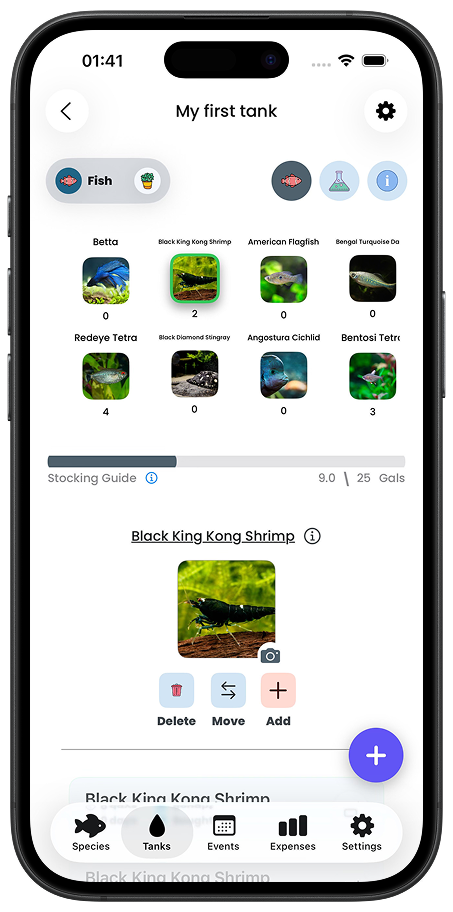
Track your aquarium's health and ensure your Blue Velvet Shrimp are thriving with the Fishi mobile app!
- ✓ Monitor water parameters for optimal Blue Velvet Shrimp health
- ✓ Get reminders for water changes and maintenance
- ✓ Track feeding schedules
- ✓ Log tank observations and fish behavior
- ✓ Manage multiple tanks effortlessly


Loved by over 100,000 fishkeepers