Chameleon Whiptail
Pseudohemiodon apithanos
(76-82°F)
Care Requirements
💧 Water Parameters
🏠 Tank Setup
🍽️ Diet & Feeding
Primarily carnivorous; requires a diet rich in live and frozen foods such as bloodworms, tubifex worms, and brine shrimp. May also accept high-quality sinking carnivore pellets and wafers.
🐟 Community Compatibility
Can be kept in a community tank with other peaceful, similarly sized fish that thrive in similar water conditions. Avoid small, aggressive, or overly active species that could stress the Chameleon Whiptail.
⚥ Sexual Dimorphism
Difficult to distinguish; males and females are similar in appearance. However, during breeding, males may show more vibrant colors and become more territorial.
🌍 Origin
South America
About Chameleon Whiptail
The Chameleon Whiptail, scientifically known as Pseudohemiodon apithanos, is a unique and intriguing species of catfish native to the fast-flowing rivers and streams of South America, particularly in Ecuador and Peru. This species belongs to the Loricariidae family, renowned for their armored bodies and specialized mouthparts for feeding. The Chameleon Whiptail is especially noted for its ability to change coloration to blend with its surroundings, a trait that has earned it the name "Chameleon" among aquarium enthusiasts.
Pseudohemiodon apithanos has a distinctive appearance, characterized by a flattened body and a wide, leaf-like caudal fin, which aids in its camouflage among the riverbeds and foliage of its natural habitat. Its color can vary from light beige to dark brown, with patterns that mimic the look of fallen leaves and debris, providing an effective disguise against predators and when hunting for food.
Setting up an aquarium for the Chameleon Whiptail should aim to replicate the conditions of its natural environment. This includes providing a substrate of fine sand or smooth gravel that allows for the fish to burrow and forage as it would in the wild. The tank should also feature areas of strong water flow to mimic the oxygen-rich rivers of South America, along with plenty of hiding places created with driftwood, rocks, and live plants. These features not only help in simulating the natural habitat of Pseudohemiodon apithanos but also in maintaining the water quality and providing enrichment for the fish.
The diet of the Chameleon Whiptail is predominantly carnivorous, with a preference for small invertebrates and organic detritus in the wild. In captivity, their diet should be supplemented with a variety of high-quality sinking foods, such as pellets and wafers designed for bottom feeders, as well as frozen or live foods like bloodworms, brine shrimp, and tubifex worms. Offering a balanced diet is crucial for maintaining their health and encouraging natural foraging behavior.
Breeding Pseudohemiodon apithanos in captivity is considered challenging, with few successful reports. This species exhibits unique breeding behaviors, with the male playing a significant role in egg guarding and care within a secluded nesting site. Creating the right conditions for breeding involves providing an optimal environment with plenty of hiding spaces and maintaining excellent water quality.
Caring for the Chameleon Whiptail requires attention to maintaining clean, well-oxygenated water with stable temperature and pH levels. Regular water changes, efficient filtration, and careful monitoring of water parameters are essential to keep these fish healthy and reduce stress. Their peaceful nature makes them suitable for community tanks with other non-aggressive species that thrive in similar water conditions, though their unique requirements and sensitivity to water quality must be considered when choosing tank mates.
In summary, the Chameleon Whiptail, Pseudohemiodon apithanos, offers aquarists the opportunity to keep a rare and fascinating species that brings a touch of the exotic to the home aquarium. While their care demands a commitment to replicating their natural habitat and dietary needs, the rewards include the enjoyment of their remarkable appearance, intriguing behaviors, and the challenge of caring for a truly unique species in the world of freshwater fish.
Ready to Add Chameleon Whiptail to Your Tank?
Use our free stocking calculator to see if Chameleon Whiptail fits your aquarium setup!
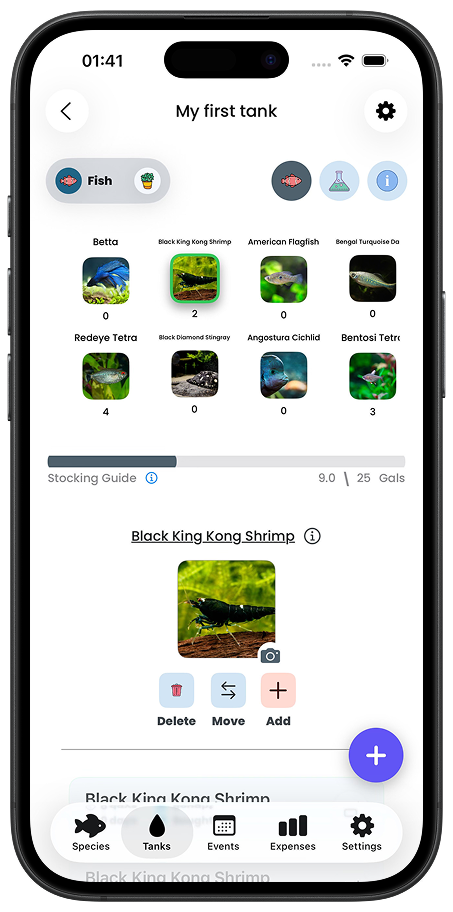
Try the Stocking CalculatorKeep Your Chameleon Whiptail Happy with Fishi
Track your aquarium's health and ensure your Chameleon Whiptail is thriving with the Fishi mobile app!
- ✓ Monitor water parameters for optimal Chameleon Whiptail health
- ✓ Get reminders for water changes and maintenance
- ✓ Track feeding schedules
- ✓ Log tank observations and fish behavior
- ✓ Manage multiple tanks effortlessly


Loved by over 100,000 fishkeepers