Cross River Bichir
Polypterus teugelsi
(76-86°F)
Care Requirements
💧 Water Parameters
🏠 Tank Setup
🍽️ Diet & Feeding
Carnivorous; enjoys a variety of meaty foods.
🐟 Community Compatibility
Best kept with species of similar size to avoid being outcompeted for food.
⚥ Sexual Dimorphism
Sexual dimorphism is not evident.
🌍 Origin
Cross River basin
About Cross River Bichir
The Cross River Bichir, Polypterus teugelsi, is a relatively recent addition to the genus Polypterus and is named in honor of the late Guy Teugels, a Belgian ichthyologist. This species is endemic to the Cross River basin in Cameroon, Africa, highlighting the diversity and specificity of habitats within the Polypteridae family. The Cross River Bichir is particularly notable for its rarity in both the wild and the aquarium trade, making it a prized specimen for dedicated enthusiasts of ancient fish species.
Polypterus teugelsi shares many of the prehistoric features characteristic of bichirs, including an elongated body covered in ganoid scales, which provide a formidable armor. Its dorsal surface is adorned with a series of finlets, which, unlike a single continuous fin, gives it a unique silhouette reminiscent of ancient aquatic creatures. The coloration of the Cross River Bichir is typically dark, with a series of lighter markings that can vary between individuals, providing camouflage in its natural habitat.
Like other bichirs, Polypterus teugelsi is an obligate air breather, equipped with a highly vascularized swim bladder that functions similarly to lungs, allowing it to survive in waters with low oxygen levels. This adaptation enables the Cross River Bichir to inhabit a variety of aquatic environments, from fast-flowing streams to stagnant pools, although its specific habitat preferences and behaviors in the wild remain relatively understudied due to its rarity.
In captivity, maintaining Polypterus teugelsi requires an environment that closely mimics its natural habitat. A spacious aquarium with a soft substrate is essential to accommodate its size and prevent damage to the underside of the fish. The tank should also include ample hiding places, such as caves and driftwood, to replicate the sheltered environments bichirs favor. Despite their predatory nature, Cross River Bichirs are generally peaceful toward tank mates of similar size, although their ability to consume smaller fish should be considered when selecting companions.
The diet of the Cross River Bichir in captivity should include a variety of protein-rich foods, such as live or frozen worms, shrimp, and small fish, supplemented with high-quality pellets formulated for carnivorous species. This dietary diversity is crucial for their health and well-being.
Breeding Polypterus teugelsi in captivity is exceedingly rare and not well-documented, requiring specific conditions and a deep understanding of their reproductive behaviors. In the wild, seasonal changes, particularly those related to the rainy season, are thought to trigger spawning behaviors in bichirs, a challenge to replicate in an aquarium setting.
The conservation status of the Cross River Bichir is not well-defined, but like many species with limited distributions, it could be vulnerable to habitat loss, pollution, and changes in river dynamics. Sustainable practices and further research are necessary to understand and protect this enigmatic species.
For aquarists who are fortunate enough to acquire a Cross River Bichir, Polypterus teugelsi offers a unique opportunity to care for a living piece of evolutionary history, providing insight into the resilience and adaptability of ancient fish species in modern aquatic environments.
Ready to Add Cross River Bichir to Your Tank?
Use our free stocking calculator to see if Cross River Bichir fits your aquarium setup!
Try the Stocking CalculatorKeep Your Cross River Bichir Happy with Fishi
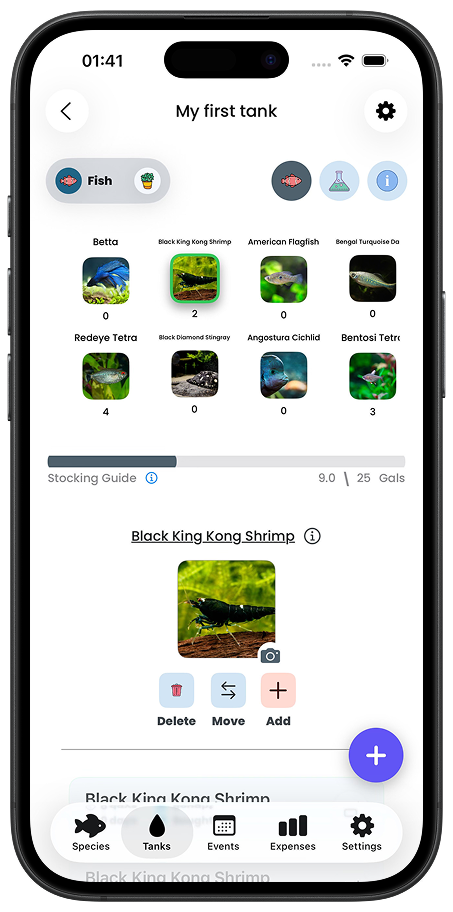
Track your aquarium's health and ensure your Cross River Bichir is thriving with the Fishi mobile app!
- ✓ Monitor water parameters for optimal Cross River Bichir health
- ✓ Get reminders for water changes and maintenance
- ✓ Track feeding schedules
- ✓ Log tank observations and fish behavior
- ✓ Manage multiple tanks effortlessly


Loved by over 100,000 fishkeepers