Dwarf Gourami
Trichogaster lalius
(75-82°F)
Care Requirements
💧 Water Parameters
🏠 Tank Setup
🍽️ Diet & Feeding
Omnivorous, prefers high-quality flakes/pellets, supplemented with live/frozen foods and vegetable matter
🐟 Community Compatibility
Small peaceful fish.
⚥ Sexual Dimorphism
Males are more colorful with vibrant patterns and longer dorsal fins, while females are generally duller in coloration
🌍 Origin
Southeast Asia
About Dwarf Gourami
The Dwarf Gourami is a popular freshwater fish that is known for its vibrant colors and peaceful nature.
The Dwarf Gourami belongs to the Trichogaster genus, with the scientific name Trichogaster lalius. It is native to the slow-moving waters of Southeast Asia, including countries like India, Pakistan, and Bangladesh.
Dwarf Gouramis have a small and elongated body with vibrant colors. The males are usually more colorful, displaying shades of blue, red, orange, and sometimes yellow, while females tend to have more subdued colors. They also have long, flowing fins.
Dwarf Gouramis are relatively small fish, with males typically growing to about 2 to 2.5 inches (5 to 6 cm) in length, and females slightly smaller.
Dwarf Gouramis are generally peaceful and can be kept in community aquariums with other peaceful fish species. However, it's important to note that they may display territorial behavior towards their own species or similar-looking fish. Providing plenty of hiding spots and visual barriers in the tank can help reduce aggression.
Water Parameters: Dwarf Gouramis prefer slightly acidic to neutral water conditions. Maintaining good water quality is important for their overall health.
Dwarf Gouramis are omnivorous and will readily accept a variety of foods. They can be fed high-quality flake or pellet food designed for tropical fish. It's also beneficial to offer them a varied diet that includes live or frozen foods like brine shrimp, daphnia, or bloodworms.
Dwarf Gouramis can be kept in a well-planted aquarium with plenty of swimming space. A tank size of around 10 gallons or larger is suitable for a small group. Providing floating plants or creating shaded areas with the help of decorations can help mimic their natural habitat and make them feel more secure.
Breeding Dwarf Gouramis can be a rewarding experience. Here's a general overview of the breeding process for Dwarf Gouramis:
Prepare a separate breeding tank or a sectioned area within the main tank to provide a controlled environment. The tank should have a capacity of at least 10 gallons and be equipped with a sponge filter or a gentle filtration system to prevent strong water currents that may disturb the breeding process.
Prior to breeding, it's important to condition the male and female Gouramis separately. Feed them a varied and nutritious diet consisting of high-quality foods, including live or frozen foods like bloodworms, daphnia, and brine shrimp. Maintaining optimal water conditions, such as suitable temperature and water quality, is also crucial.
Once the Gouramis are adequately conditioned, introduce the male and female into the breeding tank. Ensure that there are plenty of hiding spots, such as dense vegetation or caves, where the female can seek refuge if needed.
The male will begin to court the female by flaring his fins and displaying vibrant colors. He may build bubble nests at the water surface using saliva and plant material. The pair will engage in elaborate courtship displays, with the male attempting to entice the female towards the nest.
When the female is ready, she will assume a head-down position near the nest while the male wraps his body around her to initiate spawning. During this process, the female will release eggs, and the male will fertilize them. This spawning behavior may repeat several times, resulting in multiple batches of eggs.
After spawning, the male will collect the eggs and place them into the bubble nest. It's important to ensure the water surface is calm to prevent the nest from being disrupted. The male will diligently guard the nest, periodically repairing and tending to it.
The eggs will hatch within 24 to 48 hours, and the fry will remain in the bubble nest for a few more days until they become free-swimming. At this point, the male should be removed from the tank to prevent him from potentially eating the fry. The fry can be fed infusoria or commercially available liquid fry food initially and gradually transitioned to powdered or crushed flake food as they grow. It's worth noting that while some Dwarf Gourami pairs may readily breed, others may require specific conditions or additional stimuli to trigger the breeding behavior. Patience and observation are key during the breeding process.
It's important to note that Dwarf Gouramis have been known to be susceptible to a viral disease called Dwarf Gourami iridovirus (DGIV). When selecting these fish, ensure they appear healthy and active, and maintain good water quality to minimize the risk of disease.
Ready to Add Dwarf Gourami to Your Tank?
Use our free stocking calculator to see if Dwarf Gourami fits your aquarium setup!
Try the Stocking CalculatorKeep Your Dwarf Gourami Happy with Fishi
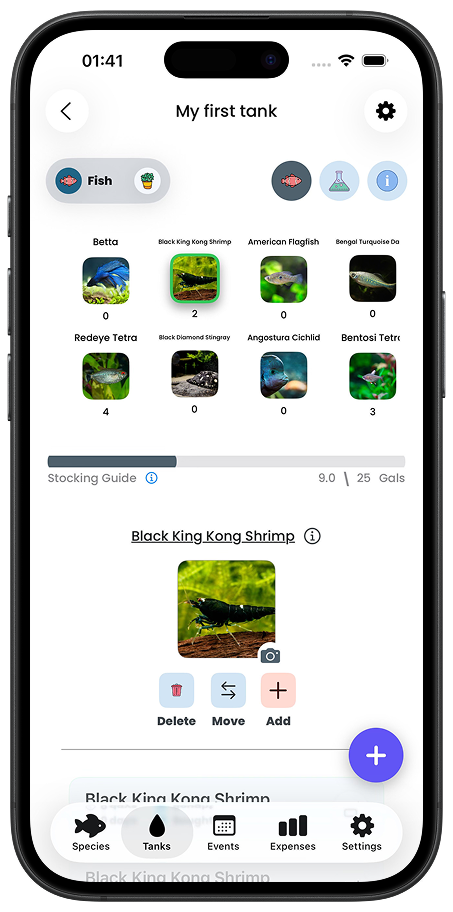
Track your aquarium's health and ensure your Dwarf Gourami is thriving with the Fishi mobile app!
- ✓ Monitor water parameters for optimal Dwarf Gourami health
- ✓ Get reminders for water changes and maintenance
- ✓ Track feeding schedules
- ✓ Log tank observations and fish behavior
- ✓ Manage multiple tanks effortlessly


Loved by over 100,000 fishkeepers