Giant Bumblebee Catfish
Pseudopimelodus bufonius
(75-82°F)
Care Requirements
💧 Water Parameters
🏠 Tank Setup
🍽️ Diet & Feeding
Carnivorous; prefers live and frozen foods like fish and worms.
🐟 Community Compatibility
Suited for a species-specific tank or with large, robust tank mates.
⚥ Sexual Dimorphism
Sexual dimorphism is not pronounced.
🌍 Origin
South America
About Giant Bumblebee Catfish
Pseudopimelodus bufonius, commonly known as the Giant Bumblebee Catfish, is a striking and robust species of freshwater fish native to the rivers and waterways of South America, particularly in Colombia and Venezuela. This species is part of the Pseudopimelodidae family, which is known for its members' predatory nature and distinctive appearances. The Giant Bumblebee Catfish, with its vibrant yellow and black banding that resembles the coloration of a bumblebee, is a fascinating addition to larger aquariums, where its behavior and interactions can be observed.
Characterized by its elongated body and large mouth, the Giant Bumblebee Catfish is an active predator that relies on its keen senses to locate food. It can grow to a significant size, necessitating a spacious aquarium to accommodate its growth and ensure proper swimming space. Despite its predatory instincts, this catfish can be kept with other large and similarly sized fish, provided there is a clear understanding of its dietary needs and behavioral tendencies.
Creating an optimal environment for Pseudopimelodus bufonius involves simulating the conditions of its natural habitat as closely as possible. This includes providing a substrate of fine sand or smooth gravel, along with various hiding spots and structures such as caves, driftwood, and robust plants. The tank should also feature areas of moderate to strong water flow to mimic the flowing rivers of South America, enhancing the catfish's well-being and activity levels.
The diet of the Giant Bumblebee Catfish is carnivorous, focusing on live or frozen prey such as fish, shrimp, and worms. In captivity, it's essential to provide a varied diet that includes high-quality, meaty foods to satisfy its nutritional needs and predatory behavior. Care should be taken to ensure that all fish in the aquarium are receiving adequate nutrition, as the Giant Bumblebee Catfish might outcompete slower or more timid species during feeding times.
Breeding Pseudopimelodus bufonius in captivity is challenging and not commonly reported. Little is known about their breeding habits and requirements in the wild, making captive breeding efforts speculative and primarily unsuccessful for casual aquarists.
Caring for the Giant Bumblebee Catfish requires attentive aquarium management, including regular water changes, effective filtration, and monitoring of water parameters to maintain a healthy environment. Its compatibility with other fish should be carefully considered, focusing on species that can coexist peacefully with a large, predatory catfish.
In summary, Pseudopimelodus bufonius, or the Giant Bumblebee Catfish, offers aquarists the opportunity to keep a unique, visually striking, and behaviorally interesting species. While its care demands a commitment to providing a suitable environment, meeting its carnivorous dietary needs, and understanding its predatory nature, the rewards include the enjoyment of its dynamic presence and captivating appearance, making it a prized species for experienced fish keepers with adequately sized aquariums.
Ready to Add Giant Bumblebee Catfish to Your Tank?
Use our free stocking calculator to see if Giant Bumblebee Catfish fits your aquarium setup!
Try the Stocking CalculatorKeep Your Giant Bumblebee Catfish Happy with Fishi
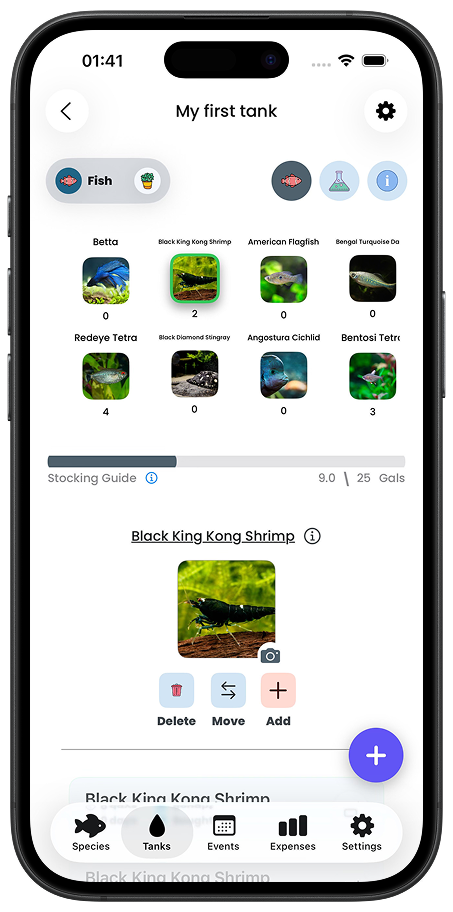
Track your aquarium's health and ensure your Giant Bumblebee Catfish is thriving with the Fishi mobile app!
- ✓ Monitor water parameters for optimal Giant Bumblebee Catfish health
- ✓ Get reminders for water changes and maintenance
- ✓ Track feeding schedules
- ✓ Log tank observations and fish behavior
- ✓ Manage multiple tanks effortlessly


Loved by over 100,000 fishkeepers