Green Barb
Barbodes semifasciolatus
(72-77°F)
Care Requirements
💧 Water Parameters
🏠 Tank Setup
🍽️ Diet & Feeding
Omnivorous; accepts a wide range of foods, including flakes and live foods.
🐟 Community Compatibility
Compatible with other peaceful community fish, best kept in schools for natural behavior.
⚥ Sexual Dimorphism
Males tend to have brighter colors during spawning.
🌍 Origin
Southeast Asia
About Green Barb
Barbodes semifasciolatus, commonly known as the Green Barb or Schuberti Barb, is a vibrant and active freshwater fish native to Southeast Asia. This species is particularly noted for its striking greenish hue, which can vary in intensity depending on the fish's environment, diet, and lighting conditions. Originally found in parts of China and Vietnam, the Green Barb has become a popular choice among aquarium enthusiasts worldwide due to its lively behavior and compatibility with a wide range of community fish.
Green Barbs are relatively small and exhibit a schooling nature, thriving best in groups where they can interact and display their social behaviors. Their bodies are elongated and slightly compressed laterally, featuring a mix of green and gold colors, with darker bands running across their sides. This coloration, along with their peaceful temperament, makes them an excellent addition to community tanks, adding both movement and visual appeal.
Creating an ideal environment for Barbodes semifasciolatus involves mimicking their natural habitat as closely as possible. This includes providing a well-planted aquarium with ample space for swimming and some areas of dense vegetation or decor for hiding and exploration. While they are adaptable to a variety of water conditions, maintaining clean, well-oxygenated water with stable parameters is crucial for their health and well-being.
The diet of the Green Barb is omnivorous, including a variety of foods in the wild. In captivity, they can be fed high-quality flake foods, pellets, and live or frozen foods such as bloodworms, brine shrimp, and daphnia. Offering a balanced and varied diet ensures they receive all the necessary nutrients for optimal health and vibrant coloration.
Breeding Barbodes semifasciolatus can be achieved with some effort. They are egg scatterers, releasing their eggs among plants or on the substrate, where fertilization occurs externally. To encourage spawning, providing optimal water conditions and a nutritious diet are crucial. After spawning, it is advisable to remove the adults to prevent them from consuming the eggs or fry.
In community aquarium settings, Green Barbs are generally peaceful but may exhibit fin-nipping behavior towards fish with long, flowing fins, especially if not kept in sufficiently large groups. Keeping them in schools helps minimize this behavior, as it distributes their energy and attention among the group rather than targeting individual tank mates.
In summary, Barbodes semifasciolatus, or the Green Barb, offers aquarists the chance to keep a small, peaceful, and beautifully colored species that adds both life and activity to the freshwater aquarium. While their care requires attention to their dietary, environmental, and social needs, the rewards include the enjoyment of their dynamic presence and the enriching experience of observing their schooling behavior, making them a favored choice for those looking to add a splash of color and natural behavior to their aquatic community.
Ready to Add Green Barb to Your Tank?
Use our free stocking calculator to see if Green Barb fits your aquarium setup!
Try the Stocking CalculatorKeep Your Green Barb Happy with Fishi
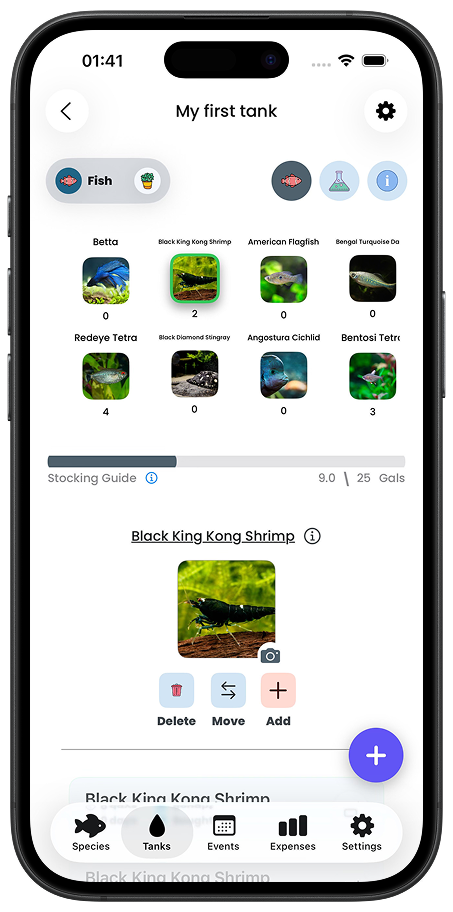
Track your aquarium's health and ensure your Green Barb are thriving with the Fishi mobile app!
- ✓ Monitor water parameters for optimal Green Barb health
- ✓ Get reminders for water changes and maintenance
- ✓ Track feeding schedules
- ✓ Log tank observations and fish behavior
- ✓ Manage multiple tanks effortlessly


Loved by over 100,000 fishkeepers