Jaguar Cichlid
Parachromis managuensis
(75-82°F)
Care Requirements
💧 Water Parameters
🏠 Tank Setup
🍽️ Diet & Feeding
Carnivorous, they prefer live or frozen foods such as worms, insects, small fish, and high-quality pellets.
🐟 Community Compatibility
Best kept alone due to their aggressive nature, but if kept with tank mates, choose large, robust species that can withstand aggression.
⚥ Sexual Dimorphism
Males may develop more intense coloration and grow larger than females.
🌍 Origin
Central America
About Jaguar Cichlid
Jaguar cichlids, scientifically known as Parachromis managuensis, are a powerful and aggressive species of cichlids native to Central America, particularly the lakes and rivers of Nicaragua and Honduras. They are named after their striking resemblance to the jaguar, with a unique pattern of black spots and bars on a light background. Jaguar cichlids are highly sought after by experienced cichlid keepers due to their aggressive nature and captivating appearance.
Jaguar cichlids have a robust and elongated body shape with a pronounced forehead and sharp, predatory-looking teeth. They can grow to a considerable size, making them one of the larger cichlid species available in the aquarium trade. Their coloration and pattern can vary, with a base color ranging from gold to pale yellow, adorned with black spots and vertical bars resembling the rosettes of a jaguar.
In their natural habitat, jaguar cichlids inhabit various freshwater environments such as lakes, rivers, and ponds. They are known for their aggressive and territorial behavior, especially during breeding and when defending their territory. Due to their aggression, they require spacious tanks with plenty of swimming space and hiding spots created by rocks, caves, and driftwood.
Behaviorally, jaguar cichlids are powerful and predatory fish. They are opportunistic feeders and primarily carnivorous, preying on smaller fish, crustaceans, and insects. In captivity, they should be fed a varied diet consisting of high-quality pellets, frozen or live foods such as small fish, shrimp, and worms to ensure they receive the necessary nutrition for their growth and vitality. It is important to avoid overfeeding as it can lead to health issues and water quality problems.
When it comes to tank mates, jaguar cichlids are best kept as the sole inhabitant of the aquarium. They are highly territorial and aggressive towards other fish, especially those of similar size or smaller. Attempting to keep them with other fish species usually results in aggression and potential harm to tank mates. Providing a large tank with suitable hiding places for the jaguar cichlid alone is the best approach to minimize conflicts.
Breeding jaguar cichlids can be challenging due to their aggressive nature. They are substrate spawners, with females laying eggs on a flat surface or in pits they dig in the substrate. Both parents are actively involved in guarding and caring for the eggs and fry. If breeding is desired, providing them with a separate breeding tank with appropriate spawning sites, such as flat stones or slate, can increase the chances of successful reproduction.
In conclusion, jaguar cichlids are impressive and visually striking fish that require careful consideration and expertise when kept in an aquarium. Their jaguar-like pattern and powerful presence make them a captivating choice for experienced cichlid keepers. By providing them with a spacious tank, suitable hiding spots, and a proper diet, jaguar cichlids can thrive and become the centerpiece of your aquatic display.
Ready to Add Jaguar Cichlid to Your Tank?
Use our free stocking calculator to see if Jaguar Cichlid fits your aquarium setup!
Try the Stocking CalculatorKeep Your Jaguar Cichlid Happy with Fishi
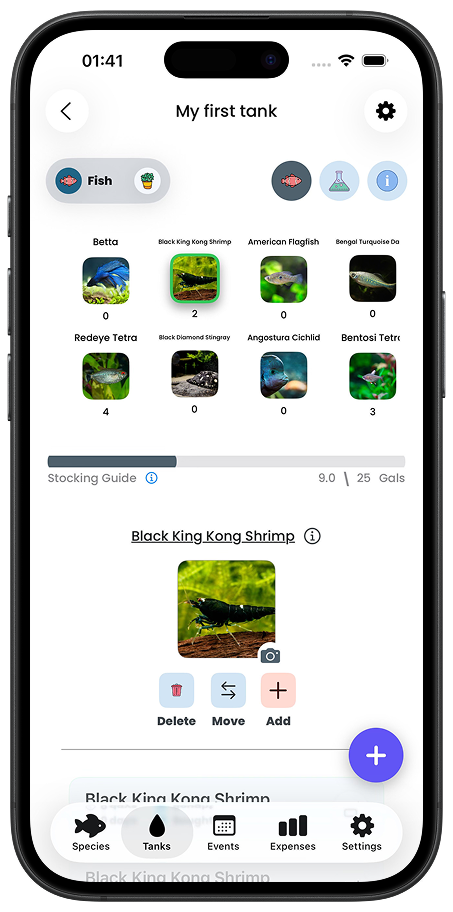
Track your aquarium's health and ensure your Jaguar Cichlid is thriving with the Fishi mobile app!
- ✓ Monitor water parameters for optimal Jaguar Cichlid health
- ✓ Get reminders for water changes and maintenance
- ✓ Track feeding schedules
- ✓ Log tank observations and fish behavior
- ✓ Manage multiple tanks effortlessly


Loved by over 100,000 fishkeepers