Koi
Cyprinus rubrofuscus
(59-77°F)
Care Requirements
💧 Water Parameters
🏠 Tank Setup
🍽️ Diet & Feeding
Omnivorous. Koi fish eat a variety of foods, including pellets, flakes, vegetables, and live or frozen treats like brine shrimp and bloodworms.
🐟 Community Compatibility
Koi are often kept in outdoor ponds with other Koi or similarly sized and peaceful pond fish, such as Goldfish and Shubunkin. They are not suitable for a typical home aquarium due to their large size.
⚥ Sexual Dimorphism
Males are often smaller and slimmer than females, especially during the breeding season.
🌍 Origin
Southeast Asia
About Koi
Koi, or Nishikigoi, are a popular and ornamental variety of domesticated common carp (Cyprinus carpio) that originated in Japan. They are celebrated for their vibrant colors, distinctive patterns, and elegant beauty. Koi have been bred for centuries, resulting in a wide range of color variations and patterns, making them sought-after fish for water gardens and ornamental ponds.
Koi come in a multitude of colors, including red, orange, yellow, blue, green, indigo, and violet, as well as various combinations and patterns like Kohaku (white body with red patterns), Taisho Sanke (white body with red and black patterns), Showa Sanshoku (black body with red and white patterns), and many others.
Caring for koi involves providing them with a well-maintained and spacious pond or water garden. A suitable environment for koi should have a minimum depth of about three feet to protect them from predators and extreme temperature fluctuations. Proper filtration and aeration are crucial for maintaining water quality, and the pond should ideally have both shaded and sunny areas. Plants, rocks, and other features in the pond provide hiding spots, shelter, and visual interest.
Koi are omnivorous and will eat a variety of foods. They consume both aquatic plants and small aquatic creatures. In a pond setting, they can be fed a balanced diet of high-quality koi pellets, flakes, and occasional treats like vegetables and fruits. Feeding should be consistent, but overfeeding should be avoided to prevent water quality issues.
Koi are known for their calm and peaceful temperament. They are social fish and tend to get along well with other koi and pond inhabitants like goldfish and certain species of aquatic turtles. However, koi can be territorial, so it's important to provide sufficient space and hiding spots in the pond to prevent conflicts.
Breeding koi can be a complex process and often requires specific conditions and controlled environments, which may not be suitable for the average pond owner. Professional koi breeders typically use specialized breeding ponds with carefully monitored water conditions to facilitate successful breeding.
In conclusion, koi are revered for their stunning colors and patterns, making them a favorite choice for outdoor ponds and water gardens. With the right pond setup, proper nutrition, and a peaceful environment, koi can thrive and become captivating additions to your aquatic landscape.
Ready to Add Koi to Your Tank?
Use our free stocking calculator to see if Koi fits your aquarium setup!
Try the Stocking CalculatorKeep Your Koi Happy with Fishi
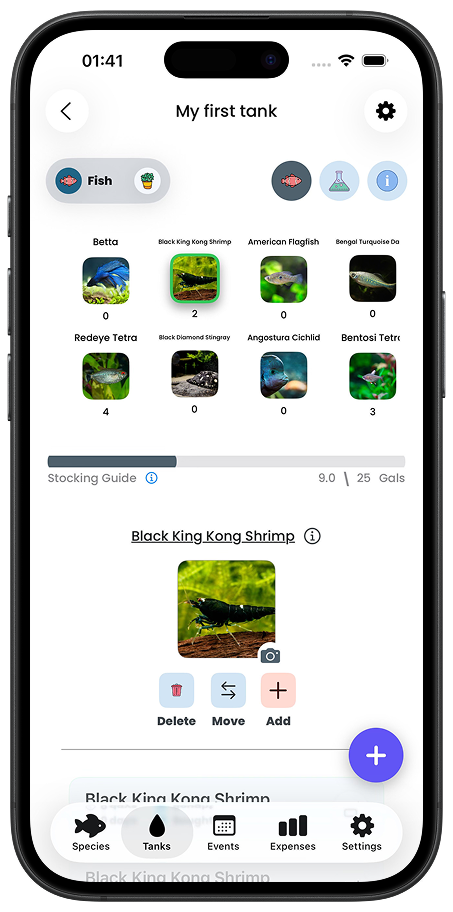
Track your aquarium's health and ensure your Koi are thriving with the Fishi mobile app!
- ✓ Monitor water parameters for optimal Koi health
- ✓ Get reminders for water changes and maintenance
- ✓ Track feeding schedules
- ✓ Log tank observations and fish behavior
- ✓ Manage multiple tanks effortlessly


Loved by over 100,000 fishkeepers