Lined Barb
Desmopuntius johorensis
(72-79°F)
Care Requirements
💧 Water Parameters
🏠 Tank Setup
🍽️ Diet & Feeding
Omnivorous; accepts flake foods, live, and frozen foods.
🐟 Community Compatibility
A peaceful schooling fish, ideal for community tanks with similarly sized peaceful fish.
⚥ Sexual Dimorphism
Males tend to have brighter colors and a slimmer body.
🌍 Origin
Southeast Asia
About Lined Barb
The Lined Barb, scientifically known as Desmopuntius johorensis, is a vibrant and active freshwater fish native to the rivers and streams of Southeast Asia, including parts of Malaysia, Sumatra, and Borneo. This species is appreciated in the aquarium hobby for its striking appearance and dynamic schooling behavior.
Desmopuntius johorensis typically features a slender, elongated body adorned with vibrant coloration. The most notable characteristic is the series of black vertical bars that run along its flanks, contrasting sharply against its golden to reddish-brown background color. This distinct patterning is complemented by a shimmering iridescence that makes the fish particularly eye-catching when viewed under proper aquarium lighting.
In captivity, Lined Barbs thrive in well-planted aquariums that offer plenty of swimming space. They are schooling fish, and maintaining a group of at least six individuals helps to promote natural behaviors and reduces stress, making the school more vibrant and active. The presence of dense vegetation not only provides hiding spaces but also mimics their natural habitat, promoting overall well-being.
The tank setup for Lined Barbs should include a soft substrate, such as sand or fine gravel, which is gentle on their barbels as they occasionally sift through the bottom. The water conditions should be clean and well-oxygenated with a gentle flow. Regular maintenance, including water changes and efficient filtration, is essential to keep the environment healthy and stable.
Diet-wise, Lined Barbs are omnivorous and not particularly fussy eaters. They do well on a diet of high-quality flake foods, supplemented with small live or frozen foods such as daphnia, brine shrimp, and bloodworms. This varied diet helps ensure they receive all necessary nutrients and maintains their vibrant coloration.
Breeding Lined Barbs can be achieved with some preparation. They are egg scatterers, spawning among fine-leaved plants. To encourage spawning, the breeding tank should have soft, slightly acidic water and be equipped with plenty of plant cover or spawning mops. The parents do not exhibit parental care and are likely to eat their eggs or fry, so they should be removed from the breeding tank once spawning has occurred.
Conservation concerns for Desmopuntius johorensis include habitat degradation and pollution in their native environments. Sustainable practices in the aquarium trade are essential to ensure that these charming fish continue to thrive both in captivity and the wild.
Overall, the Lined Barb is a delightful addition to any community aquarium, particularly for those looking to add some dynamic color and movement. Their care requirements are straightforward, making them suitable for both novice and experienced aquarists.
Ready to Add Lined Barb to Your Tank?
Use our free stocking calculator to see if Lined Barb fits your aquarium setup!
Try the Stocking CalculatorKeep Your Lined Barb Happy with Fishi
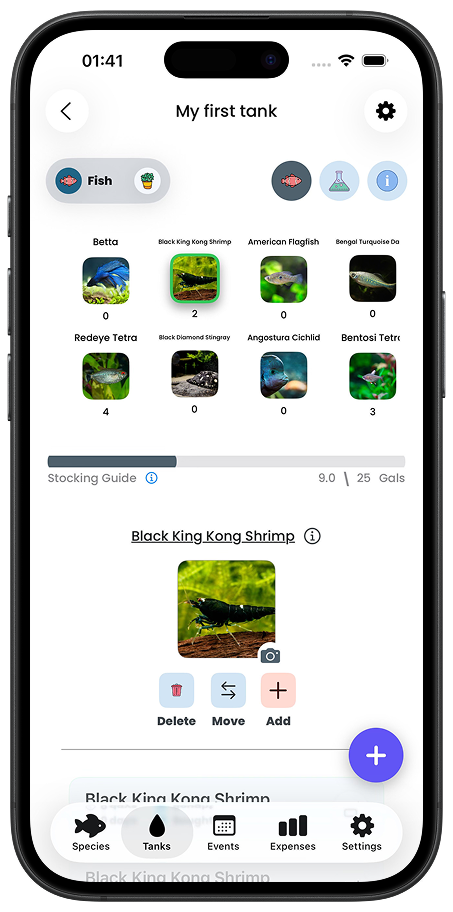
Track your aquarium's health and ensure your Lined Barb are thriving with the Fishi mobile app!
- ✓ Monitor water parameters for optimal Lined Barb health
- ✓ Get reminders for water changes and maintenance
- ✓ Track feeding schedules
- ✓ Log tank observations and fish behavior
- ✓ Manage multiple tanks effortlessly


Loved by over 100,000 fishkeepers