Livingston Cichlid
Nimbochromis livingstonii
(77-82°F)
Care Requirements
💧 Water Parameters
🏠 Tank Setup
🍽️ Diet & Feeding
Carnivorous. In the wild, they feed on smaller fish. In captivity, provide a varied diet including high-quality pellets, flakes, and occasional live or frozen foods like small fish, shrimp, and other protein-rich options.
🐟 Community Compatibility
They should be kept with other large, aggressive cichlids from Lake Malawi. Avoid keeping them with smaller or more peaceful species.
⚥ Sexual Dimorphism
Males are typically larger and may display more vibrant colors.
🌍 Origin
Lake Malawi
About Livingston Cichlid
Nimbochromis livingstonii, commonly known as Livingston's Cichlid or the Livingston's Hap, is a cichlid species native to Lake Malawi in East Africa. This species is known for its impressive size, distinctive appearance, and interesting behaviors, making it a sought-after choice for aquarium enthusiasts.
Key features of Nimbochromis livingstonii include a robust and elongated body with a pointed snout. The coloration varies, but it typically includes shades of blue, gray, or brown, with some individuals displaying darker vertical bands or spots. Mature males often exhibit more vibrant colors and may develop a hump on their forehead.
Creating an aquarium environment that replicates the rocky and sandy conditions of Lake Malawi is crucial for the well-being of Nimbochromis livingstonii. This species thrives in setups with rock formations, caves, and open swimming spaces. Due to their size and predatory nature, a spacious aquarium is recommended, and tankmates should be chosen carefully to avoid aggression.
Maintaining optimal water quality is essential, and a well-filtered system with regular water changes is necessary for the health of Nimbochromis livingstonii. These cichlids prefer stable water parameters, including temperature and pH, within the range suitable for Lake Malawi cichlids.
In terms of diet, Nimbochromis livingstonii is a carnivorous species, and its natural diet consists of small fish and invertebrates. In captivity, they can be fed a diet of high-quality cichlid pellets, supplemented with occasional live or frozen foods such as small fish, shrimp, and insect larvae.
Breeding Nimbochromis livingstonii can be challenging in captivity. They are mouthbrooders, and successful breeding may require providing suitable spawning sites, such as flat rocks or slate, and managing social dynamics. Breeding behavior may lead to increased territoriality.
In conclusion, Nimbochromis livingstonii, the Livingston's Cichlid, is a captivating and substantial cichlid species for experienced aquarium enthusiasts. By replicating their natural rocky habitat, providing a balanced and nutritious diet, and managing their social dynamics, aquarists can appreciate the unique appearance and behavior of these Lake Malawi cichlids in a home aquarium setting.
Ready to Add Livingston Cichlid to Your Tank?
Use our free stocking calculator to see if Livingston Cichlid fits your aquarium setup!
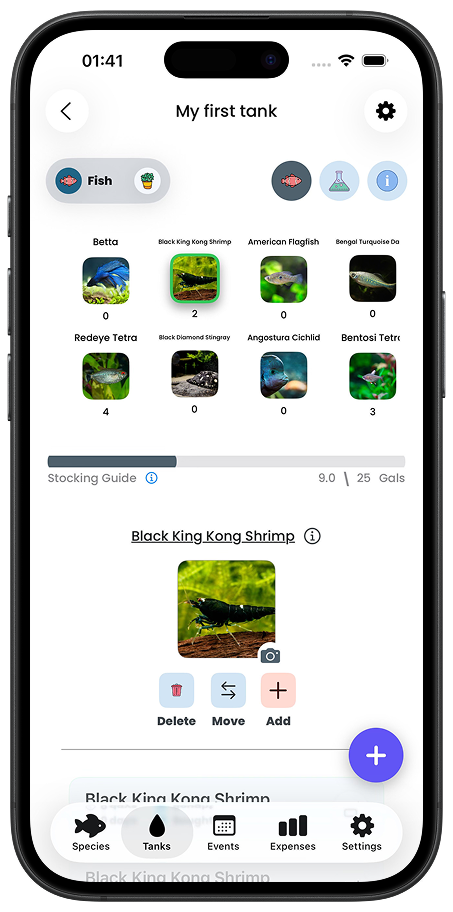
Try the Stocking CalculatorKeep Your Livingston Cichlid Happy with Fishi
Track your aquarium's health and ensure your Livingston Cichlid is thriving with the Fishi mobile app!
- ✓ Monitor water parameters for optimal Livingston Cichlid health
- ✓ Get reminders for water changes and maintenance
- ✓ Track feeding schedules
- ✓ Log tank observations and fish behavior
- ✓ Manage multiple tanks effortlessly


Loved by over 100,000 fishkeepers