Long-nosed Angelfish
Pterophyllum leopoldi
(76-86°F)
Care Requirements
💧 Water Parameters
🏠 Tank Setup
🍽️ Diet & Feeding
Omnivorous; requires a varied diet of flake foods, live, and frozen foods.
🐟 Community Compatibility
Best kept in well-planted tanks with other peaceful species, requires vertical space for swimming.
⚥ Sexual Dimorphism
Difficult to distinguish sexes visually.
🌍 Origin
South America
About Long-nosed Angelfish
The Long-nosed Angelfish, scientifically known as Pterophyllum leopoldi, is a distinctive and relatively rare species among the angelfish family, native to the rivers of the Amazon Basin in South America. This species is known for its unique appearance characterized by a more pointed snout compared to its popular relatives, such as Pterophyllum scalare. Pterophyllum leopoldi is also the smallest and one of the least common in the hobby among the three recognized species of angelfish.
Pterophyllum leopoldi displays the classic angelfish body shape, which is laterally compressed and roughly triangular, but with a notably elongated and pointed nose. They typically have a dark base color with three prominent vertical black bands that can vary in intensity. One band runs through the eye, another mid-body, and the third near the base of the tail. Between these bands, the body can show a silvery or slightly golden hue, adding to their visual appeal.
In captivity, Long-nosed Angelfish thrive in well-planned aquarium settings that mimic their natural environment. They prefer a tank with plenty of vertical space as they can grow up to 6 inches in height. The aquarium should also contain broad-leaved plants and driftwood that provide shelter and mimic the complex habitats of their home rivers. The water should be soft to moderately hard, slightly acidic to neutral, and well-maintained with regular water changes to keep it clean and stable.
The Long-nosed Angelfish is generally peaceful but can become territorial during breeding. They are best kept with other peaceful fish that do not compete aggressively for food or territory. Suitable tank mates might include smaller tetras, rasboras, or dwarf cichlids, as long as care is taken to ensure all species have compatible water and space needs.
Diet-wise, Pterophyllum leopoldi is omnivorous with a tendency towards carnivory. They should be fed a variety of high-quality foods to ensure a balanced diet. This includes flake and pellet foods designed for tropical fish, supplemented regularly with live or frozen foods such as brine shrimp, bloodworms, and daphnia. Vegetable matter should also be included occasionally to provide essential nutrients and aid in digestion.
Breeding Long-nosed Angelfish can be a challenge but is similar to breeding other angelfish species. They are known to be substrate spawners, typically laying their eggs on a flat surface such as a broad leaf or a cleaned rock. The parents often exhibit fascinating parental care, guarding and fanning their eggs until they hatch. The fry can be raised on a diet of freshly hatched brine shrimp and specially formulated fry foods.
Overall, Pterophyllum leopoldi is a fascinating and beautiful species for the more experienced aquarist looking to add a rare and elegant fish to their collection. Their unique appearance and engaging behavior make them a standout addition to any appropriate community aquarium setup.
Ready to Add Long-nosed Angelfish to Your Tank?
Use our free stocking calculator to see if Long-nosed Angelfish fits your aquarium setup!
Try the Stocking CalculatorKeep Your Long-nosed Angelfish Happy with Fishi
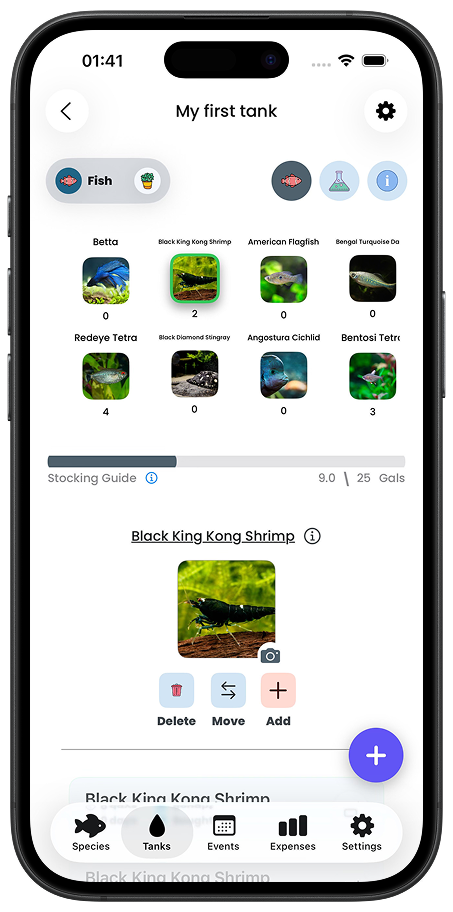
Track your aquarium's health and ensure your Long-nosed Angelfish is thriving with the Fishi mobile app!
- ✓ Monitor water parameters for optimal Long-nosed Angelfish health
- ✓ Get reminders for water changes and maintenance
- ✓ Track feeding schedules
- ✓ Log tank observations and fish behavior
- ✓ Manage multiple tanks effortlessly


Loved by over 100,000 fishkeepers