Longnose Gar
Lepisosteus osseus
(68-82°F)
Care Requirements
💧 Water Parameters
🏠 Tank Setup
🍽️ Diet & Feeding
Carnivorous; feeds on smaller fish, using its needle-like snout to spear prey.
🐟 Community Compatibility
Can be kept with other large, predatory fish.
⚥ Sexual Dimorphism
Males and females are similar in appearance, though males may be slightly smaller.
🌍 Origin
North America
About Longnose Gar
The Longnose Gar, Lepisosteus osseus, is a distinctive species of freshwater fish, known for its prehistoric appearance, elongated body, and particularly long, narrow snout filled with sharp teeth. Native to North America, it inhabits a wide range of freshwater environments, including lakes, rivers, and estuaries, demonstrating a remarkable adaptability that has allowed the species to thrive for millions of years.
Characterized by its armor-like ganoid scales, which are hard and diamond-shaped, the Longnose Gar has a formidable defense mechanism against predators. Its body is typically olive or brown in color, blending seamlessly into the aquatic vegetation and murky waters of its habitat. This coloration, along with the gar's sleek shape, enables it to be an efficient predator, lying in wait for unsuspecting prey such as smaller fish and crustaceans.
One of the most fascinating aspects of the Longnose Gar is its ability to breathe air directly from the surface due to a vascularized swim bladder that functions much like a lung. This adaptation allows it to survive in waters with low oxygen levels where other fish might perish, showcasing the gar's resilience and evolutionary ingenuity.
In captivity, keeping a Longnose Gar requires careful consideration of its natural behaviors and environmental needs. A large aquarium is necessary to accommodate its potential size and to provide ample swimming space. The tank setup should include areas of open water for swimming, as well as hiding spots that mimic the gar's natural habitat. Due to their predatory nature, tank mates should be chosen with caution to avoid predation, and a secure lid is essential to prevent escape, as gars are known to jump.
The diet of the Longnose Gar in an aquarium setting should reflect its carnivorous preferences, including a variety of live or frozen foods such as minnows, shrimp, and other suitable fish. This species' feeding habits underscore the importance of providing a nutritionally balanced diet to maintain its health and vitality.
Breeding Longnose Gars in captivity is a challenging and seldom-accomplished feat, primarily due to their size, specific mating behaviors, and the need for precise environmental conditions that are difficult to replicate outside of their natural habitat.
Conservation efforts are important for the Longnose Gar, as habitat destruction, pollution, and the impacts of invasive species pose threats to their populations. By understanding and addressing these challenges, conservationists aim to ensure the survival of this ancient fish, which continues to fascinate scientists, anglers, and aquarium enthusiasts alike.
The Longnose Gar, with its striking appearance and remarkable adaptations, offers a living connection to the distant past, reminding us of the resilience and complexity of aquatic life. For those dedicated to providing the appropriate care, the Longnose Gar can be a captivating species to observe, offering insights into the behavior and evolutionary history of one of North America's most iconic freshwater fishes.
Ready to Add Longnose Gar to Your Tank?
Use our free stocking calculator to see if Longnose Gar fits your aquarium setup!
Try the Stocking CalculatorKeep Your Longnose Gar Happy with Fishi
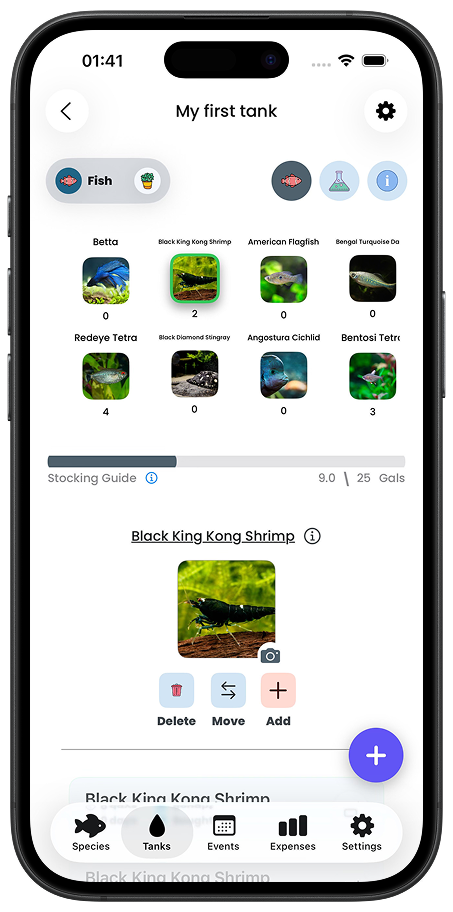
Track your aquarium's health and ensure your Longnose Gar is thriving with the Fishi mobile app!
- ✓ Monitor water parameters for optimal Longnose Gar health
- ✓ Get reminders for water changes and maintenance
- ✓ Track feeding schedules
- ✓ Log tank observations and fish behavior
- ✓ Manage multiple tanks effortlessly


Loved by over 100,000 fishkeepers