Molly
Poecilia sphenops
(72-82°F)
Care Requirements
💧 Water Parameters
🏠 Tank Setup
🍽️ Diet & Feeding
Omnivorous (flake/pellet food, live/frozen foods)
🐟 Community Compatibility
Peaceful community tank.
⚥ Sexual Dimorphism
Males are typically smaller and slimmer with a gonopodium (modified anal fin) while females are larger with a rounded abdomen
🌍 Origin
South America
About Molly
Known for their vibrant colors and lively personalities. Here's some information about Molly fish commonly kept in aquariums:
Species: The most common Molly species found in aquariums are the Poecilia sphenops (Black Molly) and Poecilia latipinna (Sailfin Molly). Black Mollies are typically black or dark gray in color, while Sailfin Mollies have a larger dorsal fin and come in a variety of colors.
Size: Mollies are relatively small fish, with adult sizes ranging from 2 to 4 inches (5 to 10 cm) in length, depending on the species and gender.
Behavior: Mollies are generally peaceful and social fish, making them compatible with a wide range of community aquariums. They are active swimmers and tend to occupy the middle and upper levels of the tank. Mollies are known to be curious and may interact with their environment and other fish.
Water Parameters: Mollies are adaptable to different water conditions but prefer slightly brackish water. They can tolerate a wide range of pH levels (around 7.0 to 8.5) and water temperatures between 72°F to 82°F (22°C to 28°C). However, it's important to note that maintaining stable water conditions is crucial for their health.
Feeding: Mollies are omnivorous and will readily accept a varied diet. They can be fed a combination of high-quality flake or pellet food designed for tropical fish, supplemented with live or frozen foods such as brine shrimp, daphnia, or bloodworms.
Tank Requirements: Mollies require a spacious aquarium with plenty of swimming space. A 20-gallon tank or larger is recommended for a small group of Mollies. Providing plants, rocks, and hiding spots will help create a more natural and stimulating environment.
Mollies are livebearers, which means they give birth to live young instead of laying eggs. Female Mollies can store sperm and produce multiple broods from a single mating. They typically give birth to a batch of fry every four to six weeks.
Remember, if you're considering keeping Molly fish, it's always important to research and understand the specific care requirements for the species you plan to keep, as different variations may have slightly different needs.
Ready to Add Molly to Your Tank?
Use our free stocking calculator to see if Molly fits your aquarium setup!
Try the Stocking CalculatorKeep Your Molly Happy with Fishi
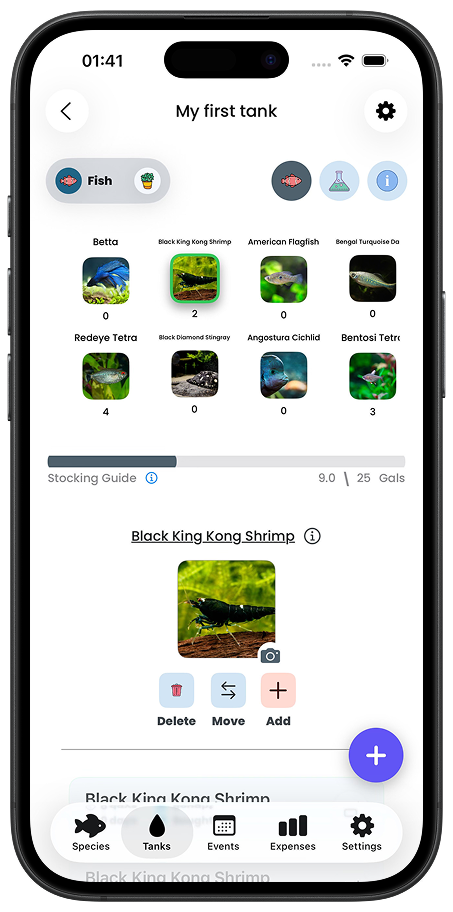
Track your aquarium's health and ensure your Molly are thriving with the Fishi mobile app!
- ✓ Monitor water parameters for optimal Molly health
- ✓ Get reminders for water changes and maintenance
- ✓ Track feeding schedules
- ✓ Log tank observations and fish behavior
- ✓ Manage multiple tanks effortlessly


Loved by over 100,000 fishkeepers