Mono
Monodactylus argenteus
(75-82°F)
Care Requirements
💧 Water Parameters
🏠 Tank Setup
🍽️ Diet & Feeding
Omnivorous; requires a diet including live foods, flakes, and green vegetables.
🐟 Community Compatibility
Needs a spacious tank with brackish water conditions. Can adapt to full marine as adults.
⚥ Sexual Dimorphism
Males and females are similar in appearance.
🌍 Origin
Africa
About Mono
The Mono, scientifically named Mono argentus, also known as the Silver Mono or Diamond Moonfish, is a fascinating brackish water species native to the coastal and estuarine waters of the Indo-Pacific region, including areas from Africa to the Southeast Asia. This species is highly prized in the aquarium trade for its distinctive appearance and interesting behaviors.
Characterized by its laterally compressed body, the Mono has a distinct diamond shape, which is complemented by its silvery coloration and reflective scales that can catch light beautifully, creating a striking visual effect in aquarium settings. Adults can develop vertical stripes or bands that add to their visual appeal. The Mono's fins are often edged in black, adding a sharp contrast to its shiny body.
Monos are schooling fish that thrive in groups, displaying intricate social behaviors and hierarchies when kept with their kind. This schooling nature not only makes for a more natural and stress-free environment for the fish but also creates a more dynamic and engaging display for aquarists.
The brackish water conditions that Monos require are a mix of fresh and saltwater, mimicking their natural habitats in mangrove swamps and estuaries. Setting up a brackish aquarium involves careful attention to water salinity, which should be maintained with the use of marine salt mixes to achieve the specific gravity suitable for the species. The tank should also be equipped with efficient filtration to keep the water clean and well-oxygenated.
Diet-wise, Monos are omnivorous, displaying a preference for a varied diet that includes both plant matter and protein sources. In the aquarium, they can be fed a combination of algae-based foods, along with live or frozen foods such as brine shrimp, bloodworms, and chopped seafood. A balanced diet is crucial for maintaining their health and vibrant appearance.
One of the unique challenges of keeping Monos is accommodating their growth and transition to more marine conditions as they mature. Young Monos can start in lower salinity environments, but as they age, they often require higher salinity levels, similar to those of marine aquariums. This transition reflects their natural lifecycle, moving from estuarine environments to more open seas as they grow.
Breeding Monos in captivity is challenging and rarely achieved by casual aquarists, largely due to the difficulty in replicating the precise environmental conditions and triggers necessary for spawning.
Given their specific care requirements and stunning appearance, Monos are best suited for aquarists with some experience, especially those willing to invest the effort in creating and maintaining a brackish or marine environment. With the right care, these fish can be a captivating centerpiece in the home aquarium, offering a glimpse into the unique ecosystems they inhabit in the wild.
Ready to Add Mono to Your Tank?
Use our free stocking calculator to see if Mono fits your aquarium setup!
Try the Stocking CalculatorKeep Your Mono Happy with Fishi
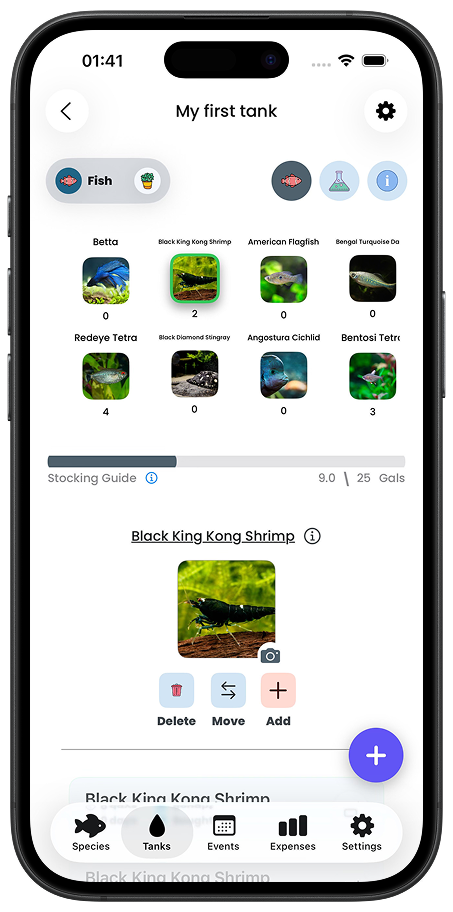
Track your aquarium's health and ensure your Mono is thriving with the Fishi mobile app!
- ✓ Monitor water parameters for optimal Mono health
- ✓ Get reminders for water changes and maintenance
- ✓ Track feeding schedules
- ✓ Log tank observations and fish behavior
- ✓ Manage multiple tanks effortlessly


Loved by over 100,000 fishkeepers