Mudskipper
Periophthalmus spp.
(75-85°F)
Care Requirements
💧 Water Parameters
🏠 Tank Setup
🍽️ Diet & Feeding
Omnivorous; eats algae, detritus, and small invertebrates.
🐟 Community Compatibility
Best kept in a brackish water setup with access to land areas for basking.
⚥ Sexual Dimorphism
Sexual dimorphism varies by species.
🌍 Origin
West Africa, Asia
About Mudskipper
Mudskippers, belonging to the genus Periophthalmus, are fascinating amphibious fish native to tropical, subtropical, and temperate regions including the Indo-Pacific and the Atlantic coast of Africa. They are especially noted for their ability to dwell both in water and on land, a unique adaptation among fish, which allows them to navigate muddy flats and mangrove ecosystems effectively.
These remarkable creatures have several specialized adaptations that enable their dual lifestyle. Their protruding eyes give them excellent vision above and below water, and they can breathe through their skin and the lining of their mouth and throat, which is kept moist to facilitate gas exchange. This is similar to the way amphibians like frogs breathe through their skin.
Mudskippers are relatively small, with most species ranging from a few inches to about a foot in length. They are typically brownish or grayish, often with patterns of stripes or spots that help them blend into their muddy environments. On land, mudskippers use their strong, muscular pectoral fins to "walk" or skip across the mud, an amusing sight that is both intriguing and endearing to watch.
In captivity, mudskippers require a specialized tank setup that replicates their natural environment. This includes a paludarium—a tank that combines both aquatic and terrestrial elements. The aquatic area should be shallow and brackish, with a salinity close to that of their natural habitat, while the land area must be muddy or sandy with access to fresh water to maintain moisture for their skin. Plants, rocks, and substrates should be arranged to allow the mudskippers to climb and perch as they would typically do in the wild.
Mudskippers are omnivorous, feeding on a diet that includes small invertebrates, algae, and detritus in the wild. In an aquarium setting, their diet can consist of frozen or live food such as bloodworms, brine shrimp, and crickets, supplemented with algae or plant-based foods. It's important to ensure a varied diet to keep them healthy and active.
Breeding mudskippers in captivity can be challenging but is possible with careful management of their environment to mimic natural breeding triggers, such as changes in temperature and daylight hours. Mudskippers are generally territorial, and males often engage in dramatic displays to attract females and deter rivals, which can include elaborate fin displays and "push-up" movements.
Conservation-wise, while mudskippers are not currently under significant threat, they are dependent on the health of their coastal and mangrove habitats, which are increasingly at risk due to pollution, habitat destruction, and the impacts of climate change. Sustainable practices and conservation efforts are crucial to ensure the preservation of these unique habitats and the fascinating species that inhabit them.
Overall, mudskippers offer a unique and captivating glimpse into the evolutionary adaptations of life between sea and land. Their care in captivity requires attention to detail and a commitment to replicating their natural conditions as closely as possible, making them a rewarding challenge for the dedicated aquarist.
Ready to Add Mudskipper to Your Tank?
Use our free stocking calculator to see if Mudskipper fits your aquarium setup!
Try the Stocking CalculatorKeep Your Mudskipper Happy with Fishi
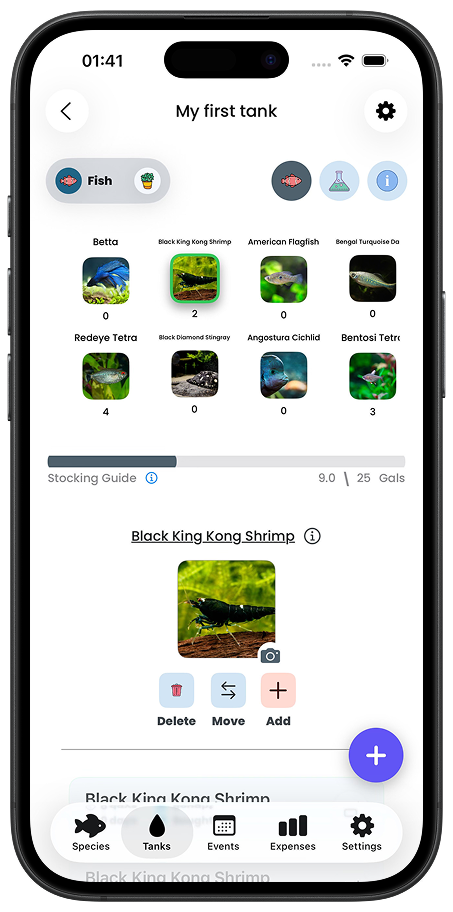
Track your aquarium's health and ensure your Mudskipper is thriving with the Fishi mobile app!
- ✓ Monitor water parameters for optimal Mudskipper health
- ✓ Get reminders for water changes and maintenance
- ✓ Track feeding schedules
- ✓ Log tank observations and fish behavior
- ✓ Manage multiple tanks effortlessly


Loved by over 100,000 fishkeepers