Panda Garra
Garra flavatra
(64-78°F)
Care Requirements
💧 Water Parameters
🏠 Tank Setup
🍽️ Diet & Feeding
Omnivorous; primarily feeds on algae, biofilm, and small invertebrates.
🐟 Community Compatibility
Can be kept with other peaceful bottom-dwellers and small, non-aggressive fish.
⚥ Sexual Dimorphism
Mature males will develop tubercles on the head when ready to breed.
🌍 Origin
Western Myanmar
About Panda Garra
The Panda Garra, scientifically known as Garra flavatra, is a distinctive and hardy freshwater fish native to the fast-flowing streams and rivers of Myanmar. This species is highly sought after by aquarists due to its striking coloration, peaceful nature, and its role as an effective algae-eater, making it a popular choice for community tanks with a naturalistic setup.
Panda Garras are easily recognizable by their bold, black-and-white or dark-and-light banding along their body, which gives them their "panda" namesake. Their robust, elongated body and wide head are typical of species adapted to fast-moving waters. This coloration, combined with their active behavior, makes them a visually appealing addition to many aquariums.
In captivity, Panda Garras thrive in well-oxygenated tanks with moderate to strong water flow, mimicking their natural habitat. A tank setup should include smooth rocks, driftwood, and caves to provide hiding spots, as well as areas for them to graze on biofilm and algae. A sandy or fine gravel substrate is ideal, and plants that can withstand water movement can be added to create a more natural environment. Regular water changes and strong filtration are important to maintain the high water quality they prefer.
Panda Garras are peaceful and can be kept with other similarly non-aggressive fish, although they do best in groups of their own species, where they exhibit natural social behaviors. While they are generally peaceful, they can become territorial, particularly with their own kind, especially if space is limited. Ensuring enough space and hiding areas in the tank helps to reduce potential conflicts.
Their diet in the wild consists primarily of algae, biofilm, and small invertebrates. In the aquarium, they will readily graze on algae, but their diet should be supplemented with high-quality sinking pellets, algae wafers, and vegetable matter such as blanched zucchini or spinach. Providing a varied diet helps keep them healthy and ensures vibrant coloration.
Breeding Panda Garras in captivity is relatively rare and can be challenging. They are egg scatterers, and successful breeding typically requires very specific water conditions, as well as a mature, well-established group of fish. If breeding is attempted, a separate breeding tank with optimal conditions and plenty of hiding spaces for the eggs is recommended. Once the eggs are laid, the adults may need to be removed to prevent them from consuming the eggs.
Overall, the Panda Garra is a fantastic choice for aquarists looking for a unique and active species. Their bold pattern, useful algae-eating habits, and relatively easy care make them a standout addition to community tanks, particularly those designed to replicate fast-flowing river environments. With proper care, they can thrive and add both beauty and function to a well-maintained aquarium.
Ready to Add Panda Garra to Your Tank?
Use our free stocking calculator to see if Panda Garra fits your aquarium setup!
Try the Stocking CalculatorKeep Your Panda Garra Happy with Fishi
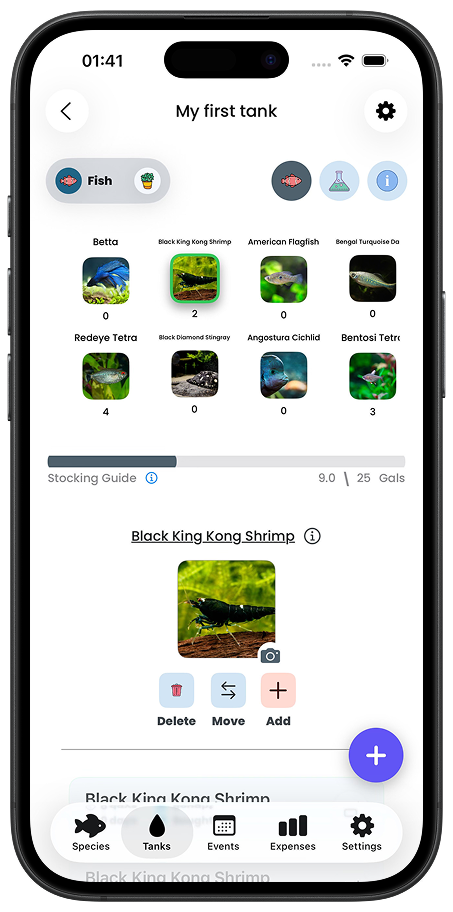
Track your aquarium's health and ensure your Panda Garra are thriving with the Fishi mobile app!
- ✓ Monitor water parameters for optimal Panda Garra health
- ✓ Get reminders for water changes and maintenance
- ✓ Track feeding schedules
- ✓ Log tank observations and fish behavior
- ✓ Manage multiple tanks effortlessly


Loved by over 100,000 fishkeepers