Rosy Loach
Yunnanilus sp. rosy
(72-78°F)
Care Requirements
💧 Water Parameters
🏠 Tank Setup
🍽️ Diet & Feeding
In captivity it readily accepts small sinking foods such as micro-pellets, crushed flakes, frozen or live daphnia, brine shrimp, and other tiny invertebrates.
🐟 Community Compatibility
Suitable for a peaceful community tank with small, similarly sized, non-aggressive fish.
⚥ Sexual Dimorphism
Males are slimmer and display a vivid orange body colour, while females are larger, rounder-bellied, and more brownish or grey with fine dark spotting.
🌍 Origin
Southeast Asia
About Rosy Loach
The Rosy Loach, scientifically known as Yunnanilus sp. “Rosy,” is a small, delicate, and beautifully colored freshwater fish originating from the slow-moving streams and ponds of Southeast Asia. Its gentle demeanor, compact size, and subtle yet radiant coloration have made it a favorite among aquarists who appreciate elegant, peaceful species suited for planted or community aquariums. The Rosy Loach exhibits a slender, slightly elongated body that tapers gracefully toward the tail. Males typically display a warm, rosy or salmon hue along their sides, often accented by a soft iridescent sheen that shimmers under aquarium lighting. Females tend to be slightly paler, with a more golden or beige tone. Both sexes may show faint horizontal striping or a subtle lateral line, adding to their understated beauty. Their small fins are translucent and proportionate, giving them a smooth, gliding motion as they explore their surroundings. In the aquarium, the Rosy Loach thrives in a calm, well-planted setup with plenty of cover and soft, fine substrate. They are naturally bottom-dwelling fish, spending much of their time gently foraging for food among the sand and plants. A setup that includes driftwood, leaf litter, and smooth stones helps create a naturalistic environment that mirrors their native habitat. They prefer subdued lighting, which enhances their coloration and makes them feel more secure. This species is social and does best when kept in small groups, as they are more active and display their best colors in the company of their own kind. A group of Rosy Loaches creates a lively yet tranquil scene, as they dart playfully through vegetation or sift gently through the substrate. They are excellent companions for other peaceful fish, such as small rasboras, tetras, or dwarf gouramis, and they are equally at home in nano tanks or larger community setups. Feeding the Rosy Loach is simple, as they readily accept a variety of small foods. Their diet should include finely crushed flakes or micro pellets, supplemented with live or frozen foods such as daphnia, brine shrimp, or bloodworms. Occasional vegetable-based foods or algae wafers can also be offered to round out their nutrition. Regular feeding with a diverse mix helps maintain their vivid coloration and active behavior. Breeding Yunnanilus sp. “Rosy” in captivity is possible under the right conditions. They are egg scatterers, typically spawning among fine plants or moss. Providing dense cover and soft, clean water can encourage breeding behavior, though raising the fry may require careful attention and separation from adult fish. The Rosy Loach is an enchanting species that combines beauty, gentleness, and adaptability in a small package. Its peaceful nature, vibrant hues, and engaging behavior make it an ideal choice for aquarists seeking a refined and lively addition to a planted or community aquarium. With proper care and stable conditions, these tiny loaches bring a soft touch of color and constant motion to any well-balanced aquatic environment.
Ready to Add Rosy Loach to Your Tank?
Use our free stocking calculator to see if Rosy Loach fits your aquarium setup!
Try the Stocking CalculatorKeep Your Rosy Loach Happy with Fishi
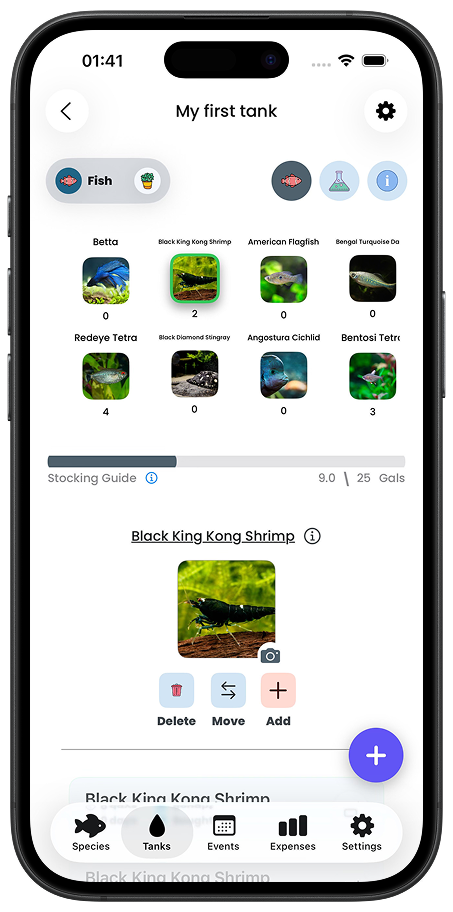
Track your aquarium's health and ensure your Rosy Loach are thriving with the Fishi mobile app!
- ✓ Monitor water parameters for optimal Rosy Loach health
- ✓ Get reminders for water changes and maintenance
- ✓ Track feeding schedules
- ✓ Log tank observations and fish behavior
- ✓ Manage multiple tanks effortlessly


Loved by over 100,000 fishkeepers