Semaphore Tetra
Pterobrycon myrnae
(75-82°F)
Care Requirements
💧 Water Parameters
🏠 Tank Setup
🍽️ Diet & Feeding
In the wild it feeds mainly on small invertebrates and insect larvae, but in aquaria it accepts high-quality flake foods, small pellets, and frozen or live fare such as daphnia and brine shrimp.
🐟 Community Compatibility
Suitable for a peaceful community aquarium with other small, non-aggressive fish.
⚥ Sexual Dimorphism
No easily discernible differences between genders
🌍 Origin
South America
About Semaphore Tetra
Blink and you’ll see tiny flags flashing beneath the forest canopy, a Morse code of fins that gives the Semaphore Tetra its unforgettable name. Pterobrycon myrnae is a small, silvery characin from Central American rainforest streams, where dappled light and leaf-littered margins create a stage for one of freshwater’s most charming displays.
The “semaphore” comes from the males: they raise and flick their contrasting dorsal and anal fins like signal flags during social encounters. In clear water, a quick flash of black and white can mean “back off,” “come closer,” or “look at me,” depending on context. Females are more subdued in color, while males develop sharper contrast and slightly extended fin rays, especially in the breeding season.
This is a schooling fish by instinct, spending most of its time in the midwater layers of gentle forest creeks. Groups cruise loosely along submerged roots and leaf edges, then dart upward to pick at insects that fall from overhanging vegetation. In the wild, their menu is a who’s-who of small invertebrates—tiny aquatic insect larvae, microcrustaceans, and occasional terrestrial bugs that meet an unexpected watery end.
Like many small characins, Semaphore Tetras rely more on finesse than force. Fin-waving and short chases settle spats without much contact, conserving energy and keeping delicate fins intact. During courtship, those same signals turn elegant, with males pacing and pivoting to ensure their flashes are seen from just the right angle. Spawning in nature is tied to warm rains and abundant food; eggs are broadcast among fine roots, plants, or leaf debris, and there’s no parental care once fertilization is done.
Pterobrycon myrnae belongs to the sprawling Characidae family—the group that includes many South American tetras—but it’s a Central American standout. Its presence hints at big biogeographic stories: over geological time, characins moved northward as land bridges formed, leaving enclaves like this species in Costa Rica’s lowland streams. That makes it as much a living chapter of natural history as a pretty face.
Look closely and you’ll notice subtle field marks: a neat dark spot near the base of the tail, a translucent body that can pick up golden or olive hues in the right light, and those trademark fin flashes in confident males. Adults stay petite—perfectly engineered for threading through root tangles, skimming under overhangs, and vanishing in a shimmer when danger looms.
There’s something disarmingly modern about a fish that communicates with punctuation marks of light and shadow. In a world of noise, the Semaphore Tetra speaks in signals—quiet, efficient, and beautiful to watch once you know what you’re seeing.
Ready to Add Semaphore Tetra to Your Tank?
Use our free stocking calculator to see if Semaphore Tetra fits your aquarium setup!
Try the Stocking CalculatorKeep Your Semaphore Tetra Happy with Fishi
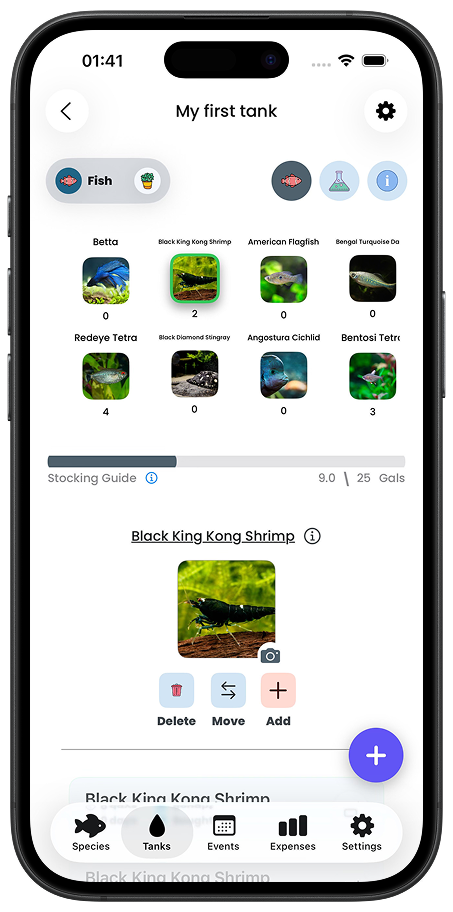
Track your aquarium's health and ensure your Semaphore Tetra are thriving with the Fishi mobile app!
- ✓ Monitor water parameters for optimal Semaphore Tetra health
- ✓ Get reminders for water changes and maintenance
- ✓ Track feeding schedules
- ✓ Log tank observations and fish behavior
- ✓ Manage multiple tanks effortlessly


Loved by over 100,000 fishkeepers