Snakeskin Barb
Desmopuntius rhomboocellatus
(74-82°F)
Care Requirements
💧 Water Parameters
🏠 Tank Setup
🍽️ Diet & Feeding
Omnivorous; consumes plant material and small invertebrates.
🐟 Community Compatibility
Well-suited to larger community tanks with robust tank mates.
⚥ Sexual Dimorphism
Females are slightly plumper than males.
🌍 Origin
Southeast Asia
About Snakeskin Barb
The Snakeskin Barb, scientifically known as Desmopuntius rhomboocellatus, is a unique and visually striking species of freshwater fish native to the slow-moving streams and swamps of Southeast Asia, particularly Borneo and Sumatra. This species is highly prized in the aquarium hobby for its distinctive patterning and active, social behavior.
Snakeskin Barbs are characterized by their intricate, snakeskin-like pattern, which consists of interlocking dark and light scales forming a mesmerizing lattice across their bodies. Their base color ranges from light yellow to golden, with the pattern overlay providing a striking contrast. Their fins are usually translucent with a hint of red or orange, adding to their overall appeal.
In captivity, Snakeskin Barbs thrive in a well-planted aquarium that mimics their natural habitat. A tank setup should include plenty of live plants, such as Java fern, Anubias, and Vallisneria, along with driftwood and leaf litter to create a natural and comfortable environment. These elements not only provide necessary cover and hiding spots but also help maintain water quality by mimicking the tannin-rich waters of their native habitat.
As schooling fish, Snakeskin Barbs should be kept in groups of at least six or more. This social structure helps reduce stress and encourages natural schooling behavior, making them more active and visually stunning. They are generally peaceful and get along well with other similarly sized, non-aggressive fish, making them suitable for community tanks.
The diet of Snakeskin Barbs should be varied to ensure they receive all the necessary nutrients. They are omnivorous and will readily accept high-quality flake foods, small pellets, and live or frozen foods such as brine shrimp, daphnia, and bloodworms. Including some vegetable matter, like blanched spinach or zucchini, can also be beneficial.
Breeding Snakeskin Barbs can be a rewarding challenge. They are egg scatterers, typically laying their eggs among fine-leaved plants or spawning mops. To encourage breeding, the water should be slightly acidic to neutral, with a temperature range that replicates their natural environment. Once spawning occurs, it is advisable to remove the adults from the breeding tank to prevent them from eating the eggs. The eggs usually hatch within a few days, and the fry can be fed with infusoria or finely crushed flake food until they are large enough to accept standard fare.
Overall, the Snakeskin Barb is an excellent addition to any well-maintained freshwater aquarium. Their stunning appearance and lively behavior make them a joy to watch, while their peaceful nature ensures they fit well into community setups. With proper care, they can thrive and bring a unique visual appeal to the aquatic environment.
Ready to Add Snakeskin Barb to Your Tank?
Use our free stocking calculator to see if Snakeskin Barb fits your aquarium setup!
Try the Stocking CalculatorKeep Your Snakeskin Barb Happy with Fishi
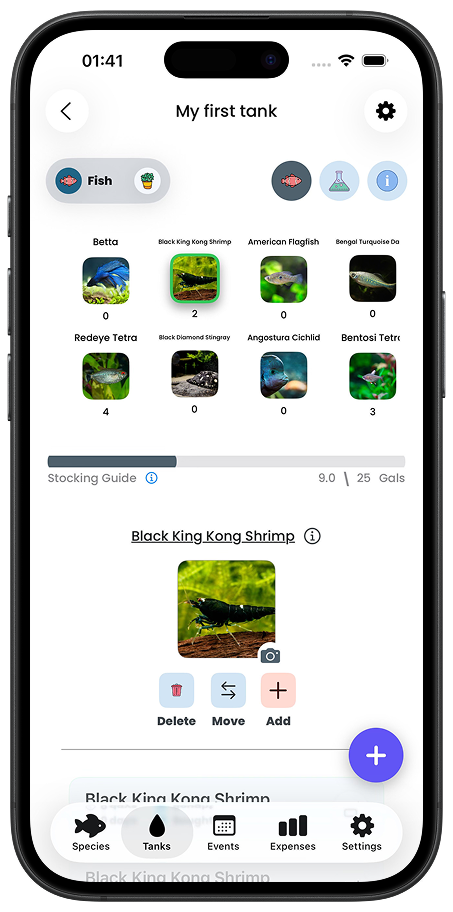
Track your aquarium's health and ensure your Snakeskin Barb are thriving with the Fishi mobile app!
- ✓ Monitor water parameters for optimal Snakeskin Barb health
- ✓ Get reminders for water changes and maintenance
- ✓ Track feeding schedules
- ✓ Log tank observations and fish behavior
- ✓ Manage multiple tanks effortlessly


Loved by over 100,000 fishkeepers