Tanganyikan Spiny Eel
Mastacembelus ellipsifer
(76-82°F)
Care Requirements
💧 Water Parameters
🏠 Tank Setup
🍽️ Diet & Feeding
Carnivorous; preys on small fish and crustaceans.
🐟 Community Compatibility
Best kept with other large, robust species from Lake Tanganyika.
⚥ Sexual Dimorphism
Males have a more elongated head.
🌍 Origin
Lake Tanganyika
About Tanganyikan Spiny Eel
The Tanganyikan Spiny Eel, scientifically known as Mastacembelus ellipsifer, is a fascinating and unique species of freshwater fish native to the rocky shores and sandy bottoms of Lake Tanganyika in East Africa. This species is highly prized by aquarists for its intriguing behavior, distinctive appearance, and relative rarity in the aquarium trade.
Tanganyikan Spiny Eels are characterized by their elongated, eel-like bodies that are covered with a series of small, sharp spines along their dorsal surface. Their coloration typically consists of a mottled pattern of browns and tans, providing excellent camouflage against the lake’s rocky substrates. This pattern is often complemented by lighter, elliptical spots, which contribute to their scientific name. Their elongated snouts and small, sharp teeth make them adept hunters.
In captivity, Tanganyikan Spiny Eels require a well-maintained aquarium that closely mimics their natural habitat. A tank setup should include a soft, sandy substrate to allow for their natural burrowing behavior without causing injury. Providing plenty of hiding spots with rocks, caves, and driftwood is essential, as these eels are nocturnal and prefer to hide during the day. They also appreciate areas with gentle water flow and ample oxygenation.
Water conditions should be slightly alkaline to neutral, with moderate to hard water, reflecting the conditions of Lake Tanganyika. Maintaining high water quality through regular water changes and efficient filtration is crucial for their health and well-being, as they are sensitive to poor water conditions.
Tanganyikan Spiny Eels are generally peaceful but can be territorial, especially with other bottom-dwelling fish. They are best kept with other large, robust fish that can tolerate their presence. Smaller fish may be seen as prey, so tank mates should be chosen carefully. These eels are also known to escape through small openings, so a tightly fitting lid is essential.
Their diet in the wild consists mainly of small invertebrates and fish. In the aquarium, they should be fed a diet of high-quality, protein-rich foods. Live or frozen foods such as bloodworms, brine shrimp, and small fish are ideal. They may also accept sinking pellets, but it’s important to ensure they receive a varied diet to meet their nutritional needs.
Breeding Tanganyikan Spiny Eels in captivity is challenging and rarely achieved. They require specific environmental conditions that are difficult to replicate in a home aquarium. In the wild, they spawn in crevices and rocky areas, where the female lays eggs that are guarded by the male. Mimicking these conditions in captivity, including providing suitable spawning sites and maintaining pristine water quality, is essential for any breeding attempts.
Overall, the Tanganyikan Spiny Eel is an excellent choice for experienced aquarists who can meet their specific care requirements. Their intriguing behavior and unique appearance make them a captivating addition to any large, well-maintained aquarium. With proper care and attention, Tanganyikan Spiny Eels can thrive and become a fascinating focal point in your aquatic setup.
Ready to Add Tanganyikan Spiny Eel to Your Tank?
Use our free stocking calculator to see if Tanganyikan Spiny Eel fits your aquarium setup!
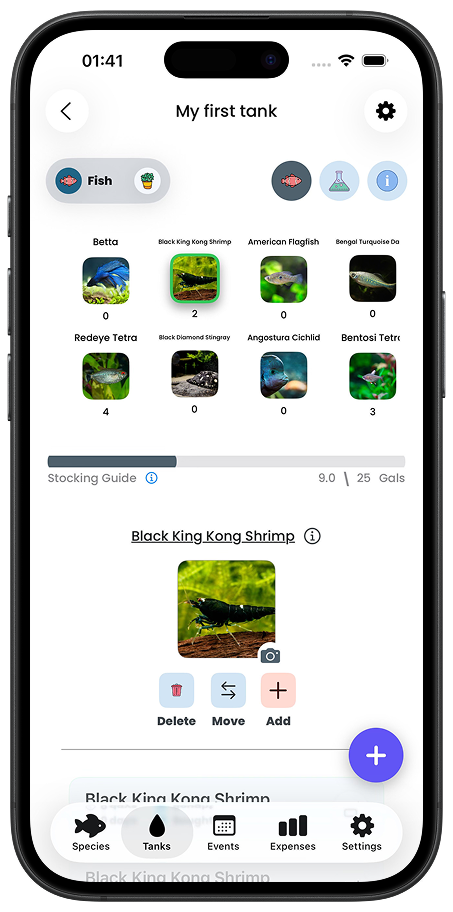
Try the Stocking CalculatorKeep Your Tanganyikan Spiny Eel Happy with Fishi
Track your aquarium's health and ensure your Tanganyikan Spiny Eel is thriving with the Fishi mobile app!
- ✓ Monitor water parameters for optimal Tanganyikan Spiny Eel health
- ✓ Get reminders for water changes and maintenance
- ✓ Track feeding schedules
- ✓ Log tank observations and fish behavior
- ✓ Manage multiple tanks effortlessly


Loved by over 100,000 fishkeepers