Venustus Cichlid
Nimbochromis venustus
(75-82°F)
Care Requirements
💧 Water Parameters
🏠 Tank Setup
🍽️ Diet & Feeding
Carnivorous. They primarily feed on small fish and invertebrates. Provide a diet consisting of high-quality pellets, flakes, and occasional live or frozen foods such as brine shrimp, bloodworms, and small fish.
🐟 Community Compatibility
Venustus Cichlids can be kept with other Lake Malawi cichlids of similar size and temperament. Avoid pairing them with overly aggressive or territorial species.
⚥ Sexual Dimorphism
Males are larger and display more vibrant colors, especially during breeding. Females are generally smaller and have less intense coloration.
🌍 Origin
Lake Malawi
About Venustus Cichlid
Venustus cichlids, scientifically known as Nimbochromis venustus, are a fascinating freshwater fish species native to Lake Malawi in East Africa. They are commonly referred to as Giraffe Hap or Giraffe Cichlid due to their unique pattern that resembles the spots on a giraffe's body. Venustus cichlids are popular among aquarium enthusiasts for their striking appearance and relatively peaceful nature, making them a sought-after choice for African cichlid tanks.
These cichlids have a sleek and elongated body shape with a vibrant coloration. The males exhibit a bright blue body with vertical bars and black spots, while the females display a more subdued coloration with a lighter blue or yellowish hue. Their pattern, reminiscent of a giraffe, adds to their visual appeal and makes them stand out in an aquarium.
In their natural habitat, Venustus cichlids inhabit the sandy areas of Lake Malawi, where they feed on a varied diet consisting of small fish, insects, and crustaceans. When setting up an aquarium for Venustus cichlids, it is essential to provide them with a sandy substrate and ample swimming space. Decorate the tank with rocks and create caves and hiding spots to mimic their natural environment.
Venustus cichlids are generally peaceful and can coexist with other Lake Malawi cichlid species. However, they may become territorial during breeding or if they feel threatened. To reduce aggression, it is recommended to keep them in larger tanks with plenty of hiding spots and territories for each fish. Choose tankmates with similar size and temperament to ensure a harmonious community.
Caring for Venustus cichlids involves providing a balanced diet that meets their nutritional needs. They are omnivorous and can be fed a combination of high-quality cichlid pellets, flakes, and occasional live or frozen foods like brine shrimp, bloodworms, or small insects. This diverse diet will support their health, coloration, and overall well-being.
Breeding Venustus cichlids can be a rewarding endeavor. They are mouthbrooders, with the females incubating the fertilized eggs in their mouths until the fry are ready to swim freely. To encourage breeding, maintain optimal water conditions, provide appropriate spawning sites, and offer a nutritious diet. Once the fry are released, they can be separated and cared for separately until they reach a suitable size to be reintroduced to the main tank.
In conclusion, Venustus cichlids are visually captivating fish known for their giraffe-like pattern and peaceful temperament. With their stunning coloration and unique appearance, they make a beautiful addition to African cichlid aquariums. By recreating their natural habitat, selecting suitable tankmates, and providing a balanced diet, Venustus cichlids can thrive and become an eye-catching centerpiece in your aquatic setup.
Ready to Add Venustus Cichlid to Your Tank?
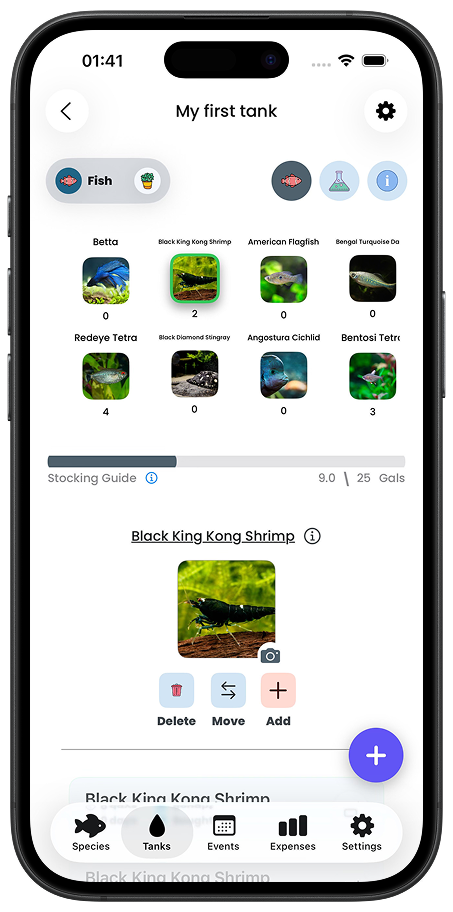
Use our free stocking calculator to see if Venustus Cichlid fits your aquarium setup!
Try the Stocking CalculatorKeep Your Venustus Cichlid Happy with Fishi
Track your aquarium's health and ensure your Venustus Cichlid is thriving with the Fishi mobile app!
- ✓ Monitor water parameters for optimal Venustus Cichlid health
- ✓ Get reminders for water changes and maintenance
- ✓ Track feeding schedules
- ✓ Log tank observations and fish behavior
- ✓ Manage multiple tanks effortlessly


Loved by over 100,000 fishkeepers